
Cleanliness and Safety in Saudi Arabia: A New Standard for Business Spaces
По мере роста коммерческого сектора Королевства и воплощения гигапроектов уборка, обслуживание и управление зданиями из второстепенной задачи превратились в подлинный бизнес-приоритет. В Эр-Рияде, Джидде и формирующихся направлениях, таких как NEOM и Красное море, организации убеждаются, что чистая, здоровая и хорошо организованная среда — это уже не «приятное дополнение», а основа производительности, репутации и благополучия сотрудников. Этот сдвиг обусловлен темпами «Видения 2030».
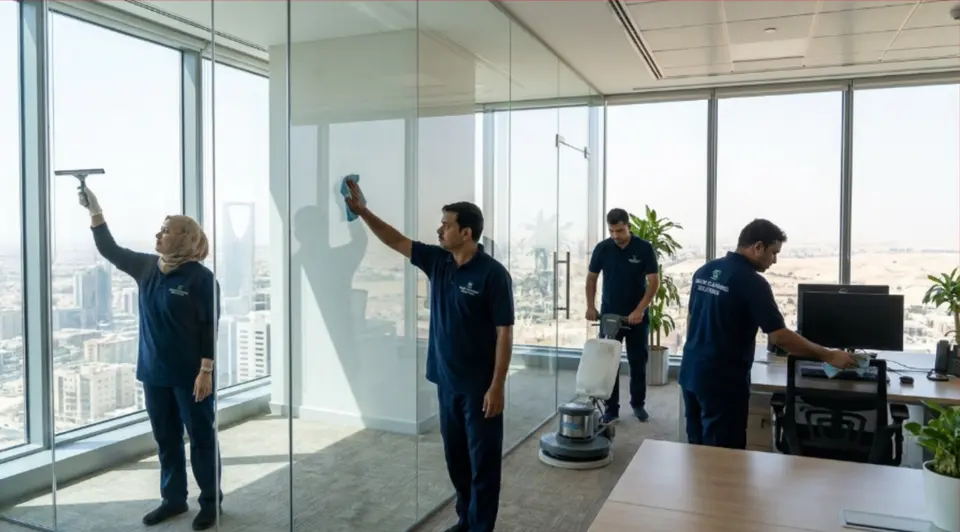
In Saudi Arabia, building and facility management has transformed from a secondary function into a strategic priority. As the Vision 2030 program is implemented, organizations across the Kingdom realize that cleanliness, safety, and proper maintenance are not luxuries, but the foundation for productivity and well-being.
From Secondary Function to Strategic Priority
The transformation in the approach to facility management in Saudi Arabia is happening rapidly. Large-scale Vision 2030 projects, including the development of NEOM and tourist zones on the Red Sea, require constant maintenance of the highest standards of cleanliness and safety. New office centers, hotels, hospitals, shopping complexes, and industrial facilities are opening at an unprecedented pace, and each must operate flawlessly from day one. This has created demand for specialized companies that provide comprehensive facility management and keep them in perfect condition.
Cleanliness as an Investment in Well-Being and Reputation
Modern employees and visitors expect a high level of care in the places where they work, study, shop, and stay. A clean and well-maintained workspace directly impacts staff health, boosts productivity, and shapes clients' first impressions of the company. In hygiene-critical institutions—hospitals, schools, hotels, and corporate offices—maintaining proper sanitary conditions is no longer an optional requirement, but a mandatory minimum. Organizations understand that investments in quality facility management pay off through improved brand image and customer loyalty.
Comprehensive Approach: Soft and Hard Facility Management
Maintaining high standards of cleanliness and safety across multiple buildings around the clock is a complex and multifaceted task. It requires trained teams of specialists, modern equipment, established processes, and continuous quality control. That is why Saudi organizations are increasingly turning to specialized service providers instead of managing this on their own. Integrated facility management, where one partner is responsible for both cleaning and sanitation (soft FM) and for the maintenance of building systems (hard FM), is becoming the standard practice in the Kingdom. This approach ensures consistency, efficiency, and unified accountability for the condition of the facility.
Expanding Services Across the Kingdom
The demand for quality facility management has led to the development of a specialized sector in Saudi Arabia. Service providers now offer a full range of solutions: from cleaning and pest control to waste management, landscaping, and security. On a technical level, specialists service ventilation and air conditioning systems, plumbing, fire protection systems, electrical equipment, elevators, and escalators. Such companies are actively expanding their presence in Riyadh, Jeddah, Dammam, NEOM, the Red Sea, Tabuk, Mecca, Medina, and Taif, supporting the infrastructure of the Kingdom's growing economy.
Frequently Asked Questions
Why is the cleanliness of facilities important for a company's image?
Cleanliness and maintenance of premises shape the first impression of a business. Employees are more productive in a clean environment, and clients and partners assess the professionalism of a company based on the condition of its facilities. This directly impacts reputation and competitiveness in the market.
What is the difference between soft and hard facility management?
Soft FM includes cleaning, sanitation, pest control, and waste management. Hard FM is responsible for the maintenance of building systems: heating, ventilation, electrical equipment, plumbing, and elevators. An integrated approach combines both areas under unified management.
How has Vision 2030 affected facility management standards?
The Vision 2030 program has accelerated infrastructure development and led to the opening of many new facilities. This has created demand for professional building management and raised standards for cleanliness, safety, and maintenance across all sectors of the economy.