Hajj 2027: Planning Guide, Permit, Health and Heat
A planning guide to Hajj 2027 (14–19 May): the official permit, a month-by-month plan, health and heat, budget lines, scams to avoid and where to find official information.
In short
- Hajj 2027 is expected on 14–19 May; it requires an official Hajj permit, and a tourist or Umrah visa cannot be used.
- Start now: national registration windows open months before the season and differ by country.
- Expect temperatures above 40 degrees: light clothes, water and shade; check the Saudi Ministry of Health vaccination requirements.
Hajj 2027 is expected on 14–19 May, and the preparation starts months earlier: the permit, the registration in your country, the documents, the health requirements and the budget. This guide puts the practical side in order so that you know what to do and when.
A note on what this is. ZiyaraGo is an independent information service. We are not a Hajj or Umrah operator, we do not sell packages, and we do not give religious instructions. Rules are set by the Saudi authorities and by your own country and change every year, so treat this guide as a map and confirm every step with the official sources.
The dates and the restrictions before them
According to the Umm al-Qura calendar, 1 Dhul Hijjah 1448 is expected on Friday, 7 May 2027. The Hajj days, 8 to 13 Dhul Hijjah, fall from Friday, 14 May to Wednesday, 19 May; the Day of Arafah is on 15 May and Eid al-Adha on 16 May. The final dates depend on the moon sighting and can move by one day.
The weeks before matter as much. In 2025 and again in 2026 the Saudi authorities paused Umrah permits and limited entry to Makkah in the period before Hajj, allowing only people with a Hajj permit, a residence permit for Makkah or a work permit for the holy sites. If the pattern repeats, the restrictions in 2027 would begin around the start of Dhul Qadah, about 8 April. The Ministry of Hajj and Umrah announces the exact dates.
Hajj is possible only with an official permit
Hajj requires a Hajj permit or visa issued through the official channels: the quota of your country, its national mission or the authorised services on the Nusuk platform. A tourist, Umrah, visit or work visa cannot be used for it. During the Hajj season you cannot stay in Makkah or enter the holy sites without a Hajj permit.
Violators face fines, deportation and an entry ban; in 2026 the press reported fines of up to SAR 20,000, and our own season page lists an entry ban of up to ten years. Quotas are set by country, so the way to apply differs: some countries run a national registration, others work through licensed operators. We are not an operator. See our Hajj page for the dates and the countdown.
A month-by-month plan
October to December 2026: decide whether you go this year, read the Hajj procedure of your own country and find out when its registration opens, since the windows differ widely and may close months before the season. Check that your passport is valid for the whole trip with the required margin and gather the documents of everyone who travels with you.
January to February 2027: finish the registration and the payments through the official national channel or a licensed operator, get the contract in writing and keep copies. Start the medical checks and talk to your doctor about vaccinations and your regular medicines. Ramadan runs from 8 February to 8 March, so book flights early if you travel in that period.
March to April: confirm the flights and the arrangements that your operator or mission provides, arrange insurance and complete the vaccinations that the Saudi Ministry of Health requires. The first half of April is also when the pre-Hajj restrictions may begin, so do not plan another trip to Makkah for those weeks.
Late April to early May: final documents, departure dates and the group contacts. Keep your plans flexible by one day for the moon sighting, and keep spare copies of the passport and permit on paper and on your phone.
Health and heat
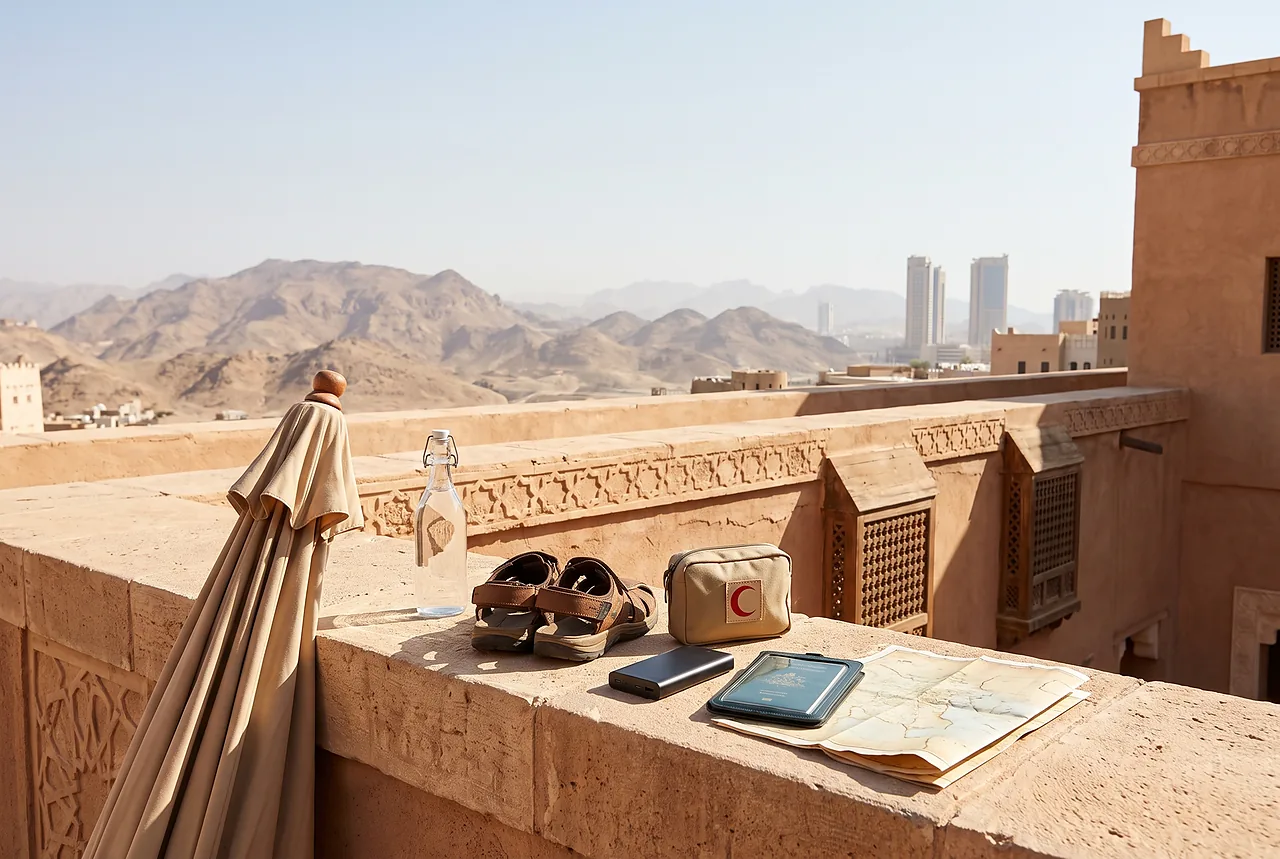
In May the temperature in Makkah is often above 40 degrees, and the days of Hajj are long. Plan for it: light clothes, a sun umbrella, plenty of water, rest in the shade in the middle of the day and the habit of drinking before you feel thirsty. Comfortable closed shoes or sturdy sandals matter more than anything else you pack.
The Saudi Ministry of Health publishes the health requirements for pilgrims each year, and in recent years they have included meningococcal vaccination; your own health authority may add others. Ask your doctor early, particularly if you have a chronic illness, are elderly or travel with children, and carry your regular medicines in their original packaging with a note from your doctor.
Budget lines
We do not give prices, because they differ by country, operator and year. Make a list of the lines instead: the fee of your national mission or operator and what it includes, flights, accommodation, local transport and meals if they are not included, health costs and insurance, a mobile data plan, personal expenses and a reserve for changes.
Ask the operator in writing which lines are already included and what happens to your money if the dates shift, a permit is refused or you cannot travel. Keep part of your money in Saudi riyals in cash and the rest in a card that works abroad.
Luggage and communication
Pack light. A small bag with two sets of light clothes, comfortable shoes, a power bank, a small first-aid kit, your documents in a waterproof sleeve and copies of the key pages is better than a large suitcase. Check your airline’s baggage rules and any limits set by your group.
Install the Nusuk app and your operator’s app in advance, save the contact numbers of your group leader and your embassy, and arrange a SIM or eSIM that works in Saudi Arabia. Download offline maps and keep your phone charged.
Scams and common mistakes
The most frequent problems are unofficial sellers of permits and packages, offers of a place outside the quota, travelling on a tourist visa, paying without a contract, unclear refund terms and agents who disappear after payment. Pay only a licensed operator or your official national channel, and check the licence with the authority of your country, not with the agent.
If you see a very cheap offer or a promise of a guaranteed place, treat it as a warning. Save the contract, the receipts and the correspondence, and report fraud to your national authority.
Where to find official information
The official sources are the Ministry of Hajj and Umrah, the Nusuk platform, the national Hajj mission or the authority that supervises pilgrimage in your country, and your embassy. Our Ramadan page and the guide to Umrah in Ramadan 2027 explain the same permit system for the earlier season.
How we chose
We built this guide from the official structure of the Hajj system as reported by Saudi and Gulf media and from our own season pages, and we left out every detail on which sources differ, such as the exact health requirements, prices and national procedures. Where details change by year, we say so.
This guide is information for planning and does not replace the instructions of the authorities, your mission or operator, or the official apps. It is not religious guidance and not an offer of Hajj services.
Tips
- Start now: national registration windows open months before the season and differ by country.
- Hajj is only possible with a Hajj permit; never travel on a tourist or Umrah visa for it.
- Pay only a licensed operator or the official channel, and get a written contract.
- Prepare for temperatures above 40 degrees: shoes, umbrella, water, shade.
- Keep every document in two copies, on paper and on your phone.
Questions and answers
When is Hajj in 2027?
The Umm al-Qura calendar expects the Hajj days on 14–19 May 2027 (8–13 Dhul Hijjah), with the Day of Arafah on 15 May and Eid al-Adha on 16 May. The final dates depend on the moon sighting.
Can I go for Hajj on a tourist visa?
No. Hajj requires an official Hajj permit; during the season you cannot stay in Makkah or enter the holy sites on a tourist, Umrah, visit or work visa.
When should I start preparing?
Now. Registration windows differ by country and may close months before the season, so find out the procedure in your own country first.
What health requirements are there?
The Saudi Ministry of Health publishes them every year, and your own health authority may add others. Recent years have included meningococcal vaccination. Ask your doctor early and check the official sources.
Do you organise Hajj trips?
No. ZiyaraGo is an independent information service. We do not sell Hajj or Umrah, we are not an operator and we do not give religious instructions.