What to Pack for Makkah and Madinah: Documents, Medicines, Clothes
A practical packing list for Makkah and Madinah: documents and Nusuk, money and the cash declaration rule, how to carry medicines under the SFDA system, electronics and power banks, clothing for the heat, what not to bring, luggage and Zamzam rules, with the date and source of every rule and a clear note where we could not confirm one.
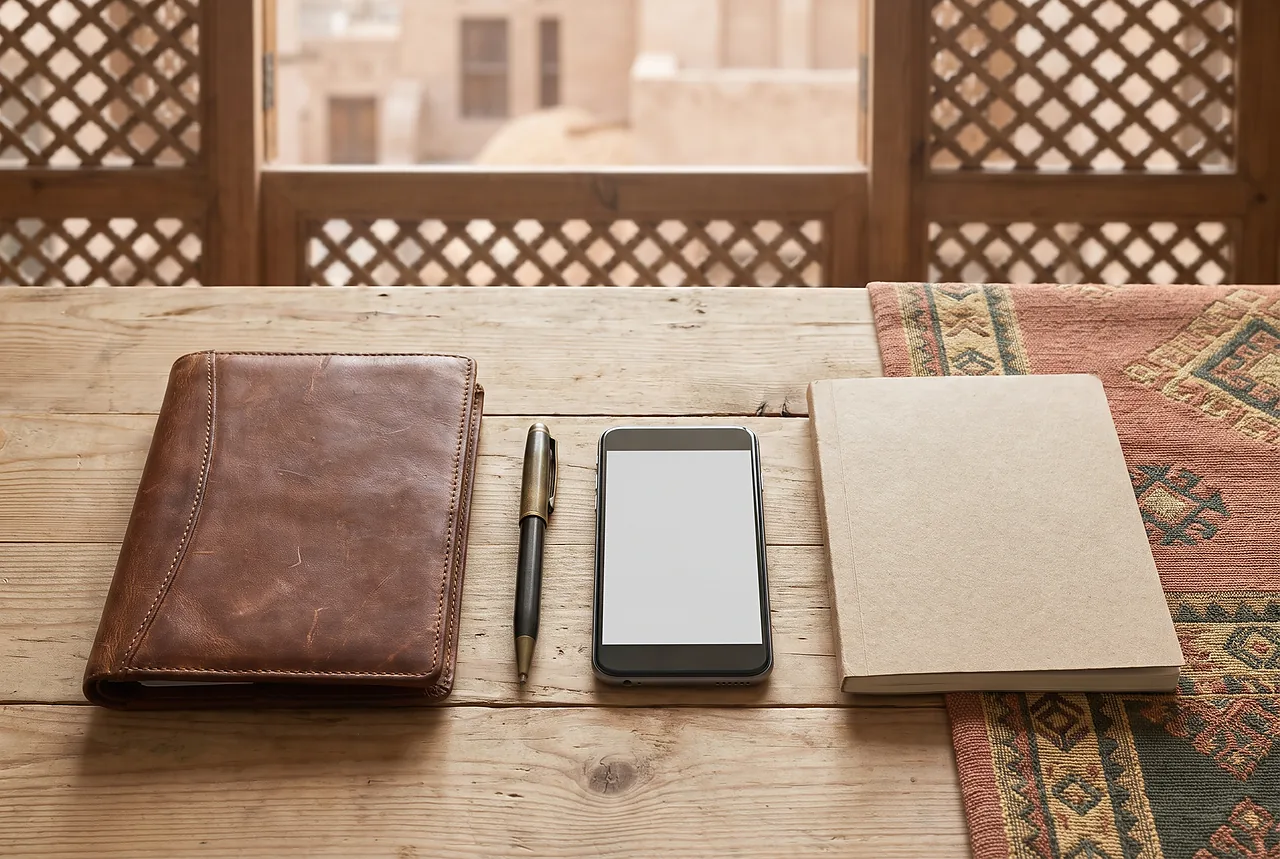
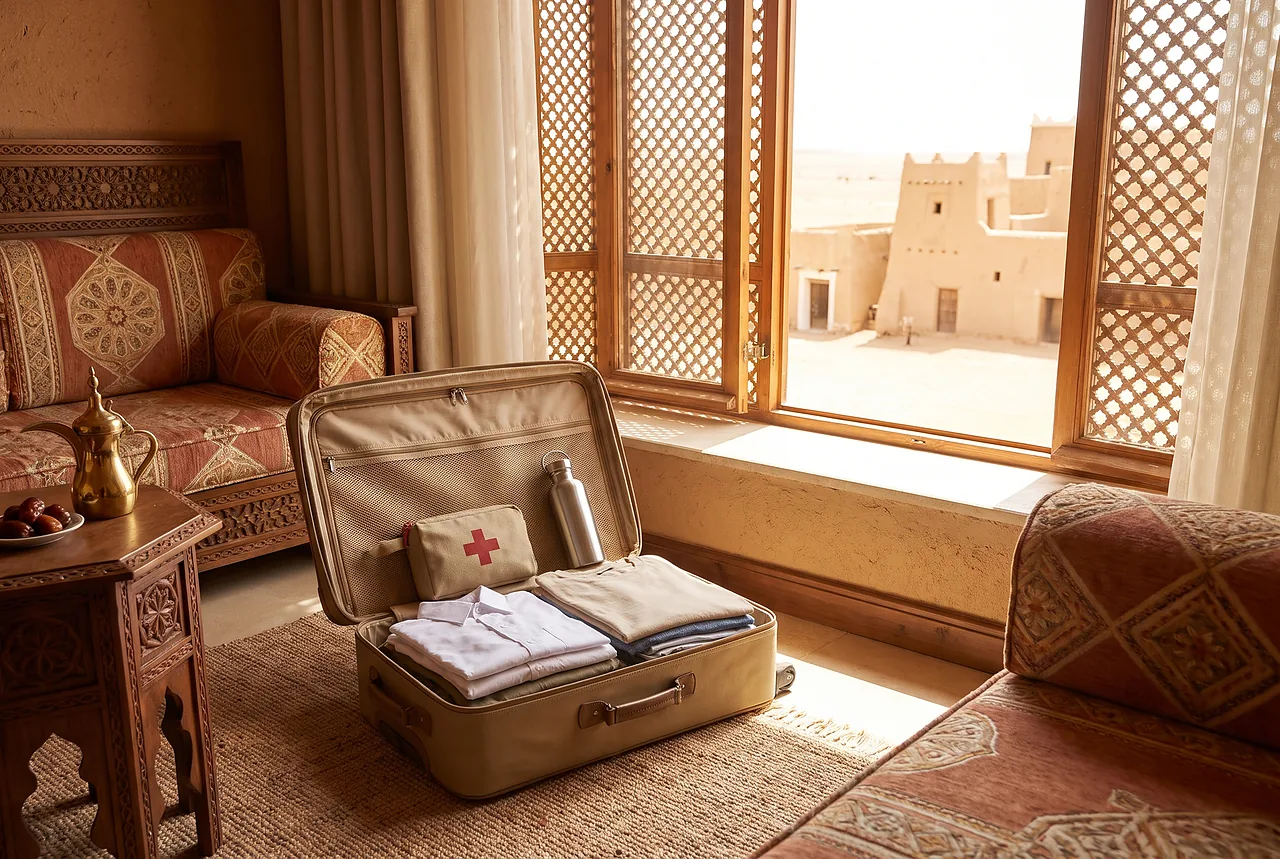
A good packing list for Makkah and Madinah is shorter than most people expect, but a few items matter a lot: the right documents, medicines carried under the rules, a power bank in your hand luggage and clothes for the heat.
This list is built from official statements and news reports, and it marks the points where sources disagree or where we could not open the official page. Check the rules for your travel date before you pack, because they change.
The list in one table
The table groups what to pack and where the rule comes from. Items marked as our advice are not official requirements.
| Category | Pack | Note |
|---|---|---|
| Documents | Passport, visa or permit, bookings, Nusuk app | Passport validity of at least 6 months for the e-visa; keep copies (our advice) |
| Money | Card that works abroad, some riyals in cash | Declare cash and valuables over the threshold at the border |
| Medicines | Personal medicines in original packaging, doctor’s note | Controlled medicines need an SFDA permit in advance |
| Electronics | Phone, charger, power bank in hand luggage | Type G sockets; up to 2 power banks, in cabin only |
| Clothing | Light, modest clothes, comfortable shoes, umbrella, cap | Heat above 40 °C for much of the year |
| Leave at home | Alcohol, drugs, unregistered medicines, drones | See the section on what not to bring |
| Zamzam | Nothing to pack | Not allowed in checked baggage; see the rules below |
Documents
For the Saudi e-visa the passport must be valid for at least 6 months on the date of entry, according to the VisitSaudi pages (this rule does not apply to US citizens). The e-visa is valid for one year with stays of up to three months, and the cost includes medical insurance, according to the same pages as quoted in search results; the list of eligible countries differs between sources, so check your own nationality on the official portal. A hotel booking or address is requested when you apply, according to a visa consultancy; this is not confirmed by an official page.
For Umrah you need an Umrah visa or a permit through the Nusuk app; we could not open the Ministry’s Umrah guide to confirm the details, so check Nusuk. Since August 2025 the Nusuk app can be used without internet data with a local SIM for permits, tickets and maps, according to the Ministry of Hajj and Umrah and Gulf News. The Rawdah permit in the Prophet’s Mosque is booked free of charge through Nusuk.
Keep paper and electronic copies of your passport, visa and bookings; this is our advice, not an official rule. For the visa types see Saudi Arabia visa: eVisa, Umrah visa, transit, and for vaccination and health rules see Health requirements for Umrah travel.
Money, cards and the cash declaration rule
The currency is the Saudi riyal. Local payment cards called mada work everywhere, Visa and Mastercard contactless cards are accepted at mada terminals and Apple Pay is accepted at contactless terminals, according to payment guides. Not every ATM accepts foreign cards, so carry some cash as a reserve.
Declare cash and valuables at the border above the threshold. Customs (ZATCA) and Gulf News gave the threshold as 60,000 riyals or the equivalent, including foreign currency, financial instruments, gold and jewellery, with a fine of 25 % of the undeclared amount for a first offence and 50 % for a repeat one (Gulf News, April 2023). Zawya, citing the Saudi Gazette, reported in 2026 that the threshold was lowered to 40,000 riyals, but it gave no date and we found no confirmation on the customs site. Treat 40,000 riyals as the safer figure and check with customs. Gifts and purchases of 3,000 riyals or more should also be declared, according to the same source.
The declaration can be made in the ZATCA app or on its website, or at the counters in the port.
Medicines
Medicines that contain narcotic or psychotropic substances are controlled and need an electronic permit in advance through the Saudi Food and Drug Authority’s Controlled Drug System. The authority’s release of 5 May 2026 lists a copy of the passport, a prescription or medical report not older than 6 months, and a photo of the medicine and its packaging. For pilgrims, the quantity is limited to 30 days or the length of the stay, whichever is shorter, according to the same release. The electronic permit system has applied since 1 November 2025 for both entry and exit.
Unregistered medicines are on the list of items the Ministry of Hajj and Umrah advises pilgrims not to bring (Gulf News, March 2025). For ordinary prescription medicines that are not controlled, travel guides recommend original packaging and a doctor’s letter or prescription not older than 6 months; we did not find a separate official rule for them. Figures for particular substances such as codeine come only from a commercial guide and are not confirmed by the authority, so we do not give them. For a long course of treatment, ask your doctor and the authority.
Electronics and phone
Saudi sockets are type G at about 230 V and 60 Hz, according to a travel guide; check that your chargers are rated for 100–240 V and see our guide to power sockets and adapters.
Power banks: no more than two per passenger, only in hand luggage, and charging them during the flight is not allowed, according to the civil aviation authority as reported by Gulf News in May 2026. The watt-hour limit was not given.
Drones: permits are issued through the civil aviation authority and are hard for tourists to obtain, and we found no clear rule for Makkah and Madinah, so we advise not bringing one. Vapes and e-cigarettes: reports conflict and we found no confirmation from customs, so do not bring them.
SIM and eSIM: stc, Mobily and Zain sell tourist SIM cards at airports and you need your passport; prices in guides are roughly 40–120 riyals depending on the data. See Madinah airport: getting to the city, money, SIM.
Clothing and bags for the heat
Makkah is hot: highs are about 30 °C by day and 18 °C at night in winter, and above 40 °C by day in much of the year, with rain rare and mostly from November to January and sudden floods possible (Wikipedia on the climate of Makkah; our own best-time guide has the monthly figures). In 2024 a temperature of 51.8 °C was recorded at the Grand Mosque, according to Gulf News.
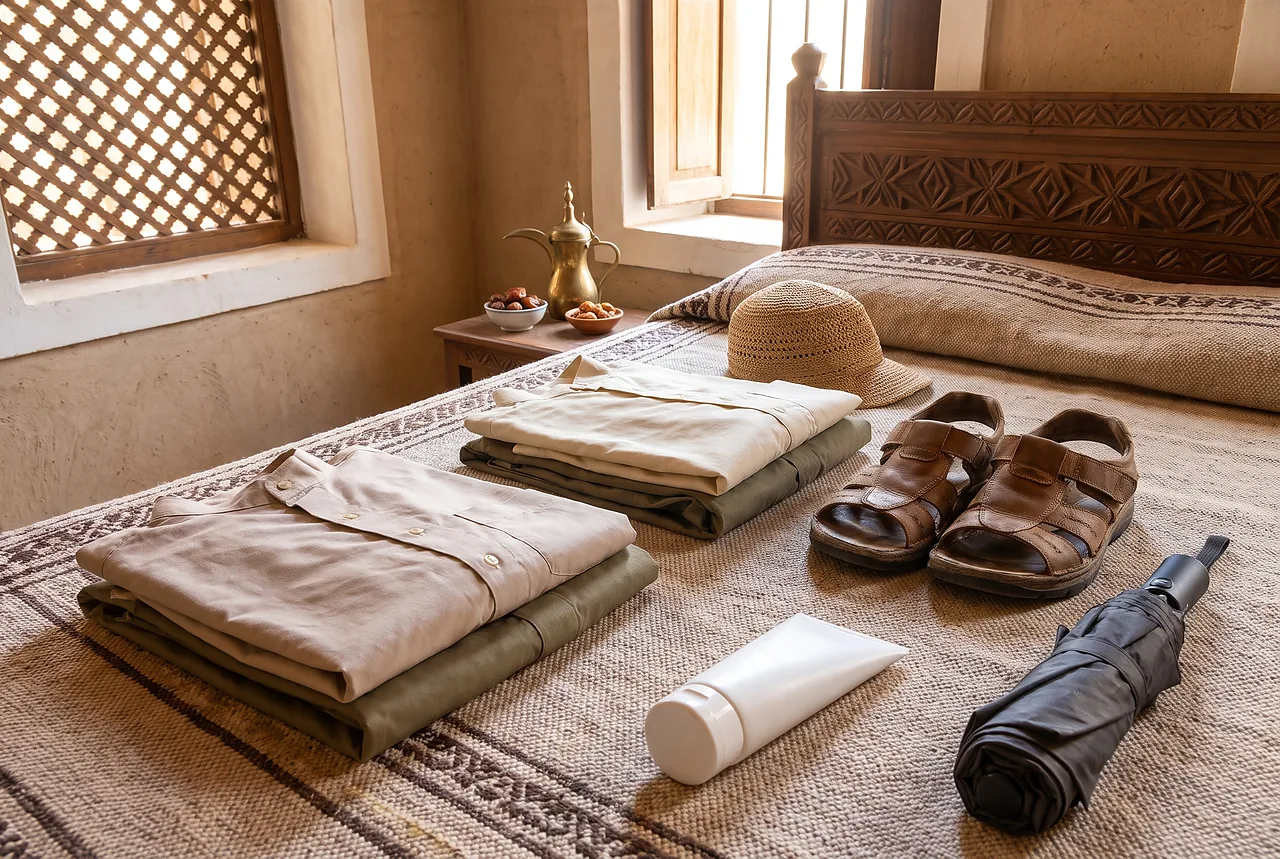
Health authorities, as reported by Gulf News, advise carrying an umbrella, drinking water regularly and avoiding the sun in the hottest hours. Pack light, loose, modest clothes, a cap, sun cream and comfortable shoes for long walks; a small bag for your shoes is practical. These last items are our advice, not official requirements.
Public decorum rules ask visitors to dress modestly and avoid clothes with offensive prints; for women, shoulders and knees are covered, and an abaya is not required for tourists, according to news reports. For flights to Makkah, the Ministry of Hajj and Umrah advised against round or shapeless bags, cloth covers, very heavy or oversized luggage and bags with long straps and buckles (Gulf News, March 2025).
What not to bring
Alcohol and narcotics of all kinds, including intoxicating pills, are prohibited, and violations can lead to prison and fines, according to customs guidance as quoted in search results; we could not open the customs page with the full list of prohibited goods.
The Ministry of Hajj and Umrah’s list of items to avoid, as reported by Gulf News in March 2025, includes fireworks, counterfeit money, unregistered medicines, tracking devices, radar detectors, stun guns, laser pointers and hidden cameras. Other lists on the internet are not official, so we do not repeat them.
If you are in doubt about an item, leave it at home or ask the customs service before you travel.
Luggage and Zamzam
Zamzam water cannot be placed in checked baggage on flights from Saudi Arabia since a civil aviation circular of 17 May 2022. Under the process the Ministry of Hajj and Umrah described in April 2025, a pilgrim buys a sealed bottle at authorised points in the terminal, one bottle per pilgrim, and needs an Umrah visa or a Nusuk permit; it is carried in hand luggage. Some blogs mention a 5-litre allowance in baggage; they contradict the official statements, so ignore them.
Baggage allowances depend on the fare: guides report that a cheap fare can include no checked baggage and that typical allowances are 20 kg or 30 kg per piece, with a maximum of 32 kg per item, but we could not confirm these figures on the airlines’ pages. Check your ticket.
For souvenirs and dates to buy there instead of carrying them, see what to buy in Makkah and Madinah, and for getting around see our transport guide. Save the numbers from Saudi Arabia emergency numbers on your phone before you travel.
How we chose
We built this list from the VisitSaudi and Ministry of Hajj and Umrah statements, the Saudi Food and Drug Authority release of 5 May 2026, reports of Gulf News, Zawya and Arab News, and travel guides, and we wrote everything in our own words. Several official pages, including the customs and civil aviation pages, could not be opened, and some points come from search results; we marked them. We did not use figures that sources contradict, such as the status of vapes and drones, and we say so. Rules change, so check the official sites before you travel.
Tips
- Check the passport validity (at least 6 months for the e-visa) and keep copies of your documents.
- Carry power banks in your hand luggage only, no more than two, and do not charge them on the plane.
- For controlled medicines, apply to the SFDA system before you travel and carry no more than 30 days’ supply.
- Carry some cash and a card that works abroad; declare cash and valuables over the border threshold, and treat 40,000 riyals as the safer figure.
- Pack light, modest clothes, comfortable shoes, a cap and an umbrella for the heat.
- Leave alcohol, drugs, unregistered medicines, drones and vapes at home, and do not put Zamzam in checked baggage.
Questions and answers
How long must my passport be valid for Saudi Arabia?
At least 6 months on the date of entry for the e-visa, according to the VisitSaudi pages (the rule does not apply to US citizens). Check the rule for your nationality on the official portal.
Do I need to declare cash on arrival?
Yes, above the threshold. Customs and Gulf News gave it as 60,000 riyals; Zawya reported in 2026 a lowered threshold of 40,000 riyals without a date. Check with customs and treat 40,000 as the safer figure.
Can I bring my medicines?
Yes, with conditions. Controlled medicines need an SFDA permit in advance, with a prescription not older than 6 months and no more than 30 days’ supply for pilgrims. Unregistered medicines are on the Ministry’s list of items to avoid.
Can I take a power bank on the plane?
Yes, in hand luggage only, no more than two, and without charging them in flight, according to the civil aviation authority (Gulf News, May 2026).
Can I bring Zamzam water home?
Not in checked baggage. Under the process described in April 2025, you buy a sealed bottle at authorised points in the terminal and carry it in hand luggage, one bottle per pilgrim, with an Umrah visa or a Nusuk permit.
What clothes should I pack?
Light, loose, modest clothes, a cap, sun cream, comfortable shoes and an umbrella, because highs are above 40 °C for much of the year. These are our advice; public decorum rules ask for modest dress.
Which sockets does Saudi Arabia use?
Type G at about 230 V and 60 Hz, according to a travel guide. Check that your chargers are rated for 100–240 V and take an adapter.
Prepared with the help of AI and checked by the ZiyaraGo team. Editorial policy