
Hajj 2026: Successful Completion of the Pilgrimage Season
Prince Saud bin Mishaal declared the success of Hajj 2026, praising leadership support, security efforts and services that enabled pilgrims to perform rituals safely.
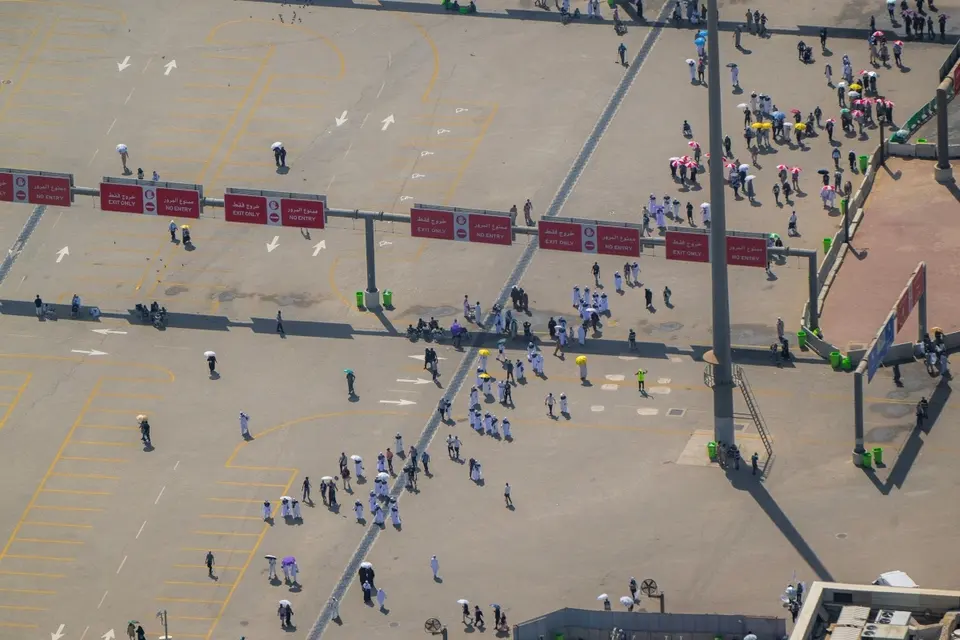
The Deputy Emir of Mecca, Prince Saud bin Mishaal, announced the successful completion of the Hajj season of 1447 in the Islamic calendar, emphasizing safety, organization, and quality of services for pilgrims.
Historic Achievement in Hajj Organization
The Hajj season of 2026 has entered history as a model of excellence in organizing one of the largest religious events on the planet. Prince Saud bin Mishaal, the Deputy Emir of the Mecca region and Chairman of the Permanent Committee for Hajj and Umrah, highlighted in a televised address that this year's success is characterized by safety, organized operations, and comprehensive provision of services and support for pilgrims. According to him, Saudi Arabia has demonstrated the image of a nation that does not sleep, whose hearts are devoted to service, and whose hands have worked tirelessly until the holy sites became a model of order and harmony.
Safety and Care for Pilgrims
A key aspect of the successful conduct of Hajj was ensuring the safety and comfort of millions of believers. Pilgrims performed their religious rituals in conditions of complete safety and tranquility, receiving care worthy of the sanctity of the place and the significance of the event. Prince Saud noted that such a result was made possible by leadership that views serving pilgrims as an honor and places human care at the center of its priorities. Continuous support at every stage of Hajj organization ensured the smooth passage of all necessary rituals for believers from around the world.
New Responsibilities and Future Commitments
The Deputy Emir emphasized that the success of Hajj is not the end of the journey, but the beginning of new responsibilities and a renewed annual promise. Saudi Arabia remains a beacon of safety and generosity, a destination of service and loyalty for pilgrims. Each successful Hajj season strengthens the kingdom's reputation as a reliable guardian of the holy places of Islam and demonstrates a constant commitment to improvement in pilgrimage organization. This commitment extends to all aspects—from infrastructure to staff training and the implementation of modern technologies to enhance the pilgrims' experience.
The Role of Technology in the Success of Modern Hajj
Organizing Hajj in the modern era requires the integration of advanced technological solutions with traditional spiritual practices. Digital platforms help pilgrims navigate the holy sites, manage their schedules, and receive important information in real-time. Mobile applications provide navigation, translations of prayers, and safety recommendations. Smart crowd management systems prevent congestion and ensure the smooth movement of millions of believers through various holy sites. Such innovative approaches allow pilgrims to focus on the spiritual side of the pilgrimage without being distracted by logistical complexities.
Frequently Asked Questions
How many pilgrims participated in Hajj 2026?
Although exact figures were not specified in the official statement, modern Hajj attracts millions of believers from over 180 countries, making it one of the largest annual religious gatherings on the planet.
What security measures were implemented during Hajj?
Saudi Arabia deployed a comprehensive security system, including modern video surveillance, coordination of emergency services, staff training, and the use of technology to monitor and manage the flow of pilgrims at the holy sites.
What services are provided to pilgrims during Hajj?
Pilgrims receive medical assistance, accommodation, meals, transportation between holy sites, information support in multiple languages, and spiritual guidance. The state also provides sanitary services and cleaning of the holy sites.