
Smart Crowd: How Haram Tracks Pilgrims in Real Time
MAKKAH — The General Authority for the Care of the Affairs of the Grand Mosque and the Prophet's Mosque has launched a digital service allowing visitors to monitor crowd levels in the Mataf and Masa'a areas in real time. The service provides live crowd density indicators and instant updates, helping worshippers and pilgrims identify less crowded routes and perform Tawaf and Sa'i more smoothly. It also provides smart indicators designed to improve crowd management efficiency and enhance the quality of services offered to visitors at the Grand Mosque. The authority said the service can be accessed
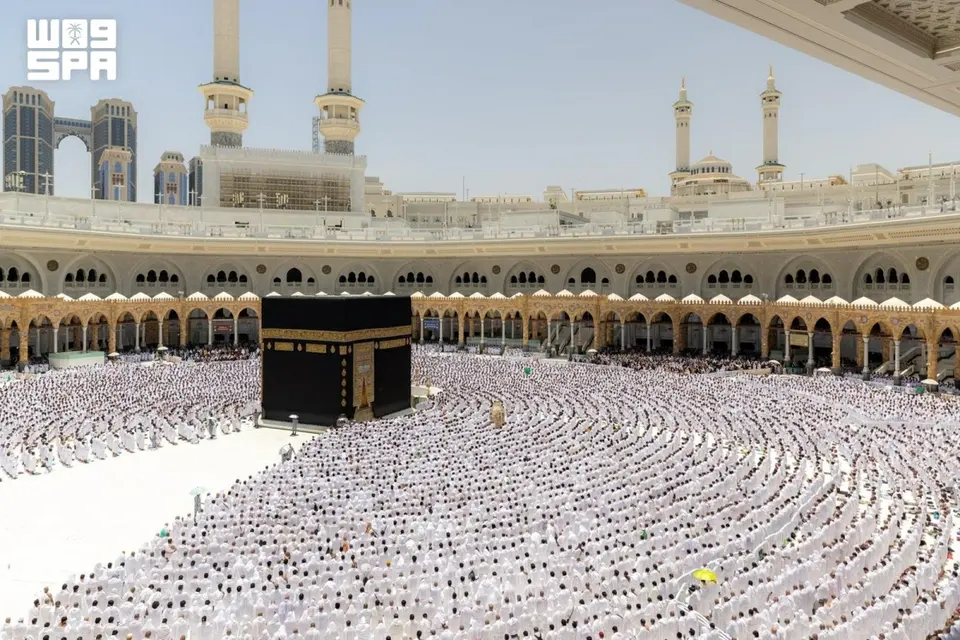
The General Authority for the Care of the Affairs of the Grand Mosque has launched a digital monitoring service for tracking the congregation of pilgrims in the Mataf and Masa'a areas. Live crowd density indicators help believers choose less crowded routes and perform Tawaf and Sa'i more comfortably.
What is the new monitoring service
The General Authority for the Affairs of the Grand Mosque and the Prophet's Mosque has introduced an innovative solution to enhance the experience of pilgrims. The digital service provides visitors with access to live data on the congestion of key areas — Mataf (the area for Tawaf) and Masa'a (the corridor for Sa'i). The system operates through QR codes that can be scanned directly in the mosque. The information is updated in real time, allowing pilgrims to make informed decisions about their route and timing for rituals.
How it facilitates pilgrimage
Traditionally, Tawaf and Sa'i are physically and emotionally intense rituals, especially during peak pilgrimage periods. Real-time waiting times and crowd density can vary by tens of minutes throughout the hour. The new system allows believers to choose optimal moments to begin their circumambulation of the sanctuary or to perform the walking between the hills. This not only enhances physical comfort but also contributes to a more focused, spiritual experience of the rituals. Pilgrims can strategically plan their time in the mosque, avoiding peak hours and selecting less congested routes.
Next-generation crowd management technology
Smart indicators embedded in the service analyze data from sensors and cameras located throughout the Mataf and Masa'a. The system uses artificial intelligence to predict peak loads and provide real-time recommendations. This allows the mosque administration not only to respond to gatherings but also to prevent their occurrence. The technology also helps distribute the flow of pilgrims more evenly, reducing the risk of dangerous situations and improving overall safety. This approach demonstrates how traditional spiritual practices can harmoniously integrate with modern digital solutions.
Accessibility and practical application
The service is accessible through a simple QR code scan, which does not require downloading additional applications or registration. The interface is designed with the diversity of pilgrims in mind — from young tech-savvy believers to elderly individuals for whom ease of use is critical. Information is displayed on clear visual indicators — green indicates low density, yellow indicates medium, and red indicates high congestion. This intuitive solution allows for an instant assessment of the situation without the need to read complex data or instructions.
Frequently Asked Questions
Can the monitoring service be used without the internet?
Access to the service requires an internet connection; however, the data loading speed is optimized to work even with a weak 4G signal. Most areas of the Grand Mosque are covered by stable mobile network coverage.
How often is the crowd data updated?
The system updates information every 5-10 seconds, providing the most current data on the situation in the Mataf and Masa'a. This allows pilgrims to receive the most accurate information for decision-making.
Is the service available in multiple languages?
Yes, the system supports the main languages of pilgrims, including Arabic, English, Urdu, Indonesian, and others. The interface automatically detects the device's language and displays information accordingly.