
Kiswah of the Kaaba: Art and Craft Embroidered in Gold
The Kiswah of the Kaaba (Kiswah) for the year 1448 AH was fully completed at the King Abdulaziz Complex for the production of the Kiswah of the Kaaba, located in the Umm al-Jud area of Mecca, about 17 kilometers from the city center. It takes up to 10 months to make one Kiswah. About 200 specialists participate in the process: embroiderers, weavers, technicians, designers, tailors. For each Kiswah, approximately: 🟢 670 kg of natural silk dyed black 🟢 about 120 kg of 21-carat gold threads 🟢 about 100 kg of silver threads The finished covering consists of 47 separate pieces of black silk with 68 verses of the Quran embroidered in silver threads with a 24-carat gold coating. The total weight of the Kiswah is about 1415 kg. The manufacturing process goes through seven main stages.
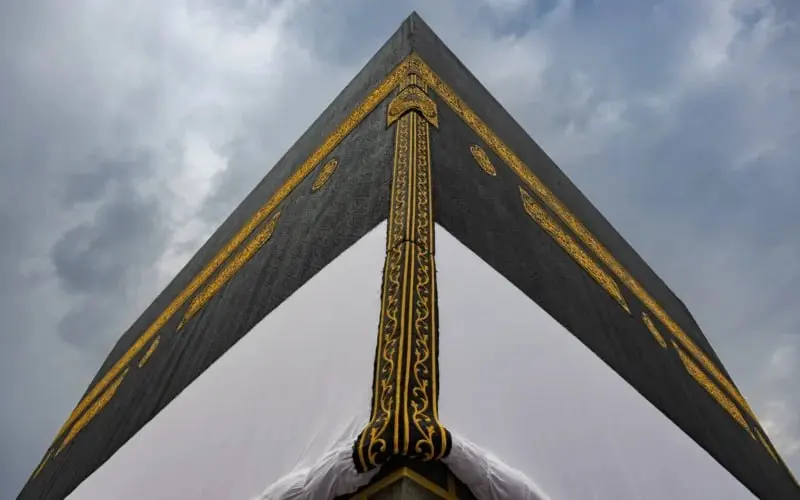
Every year in Mecca, a new sacred covering for the Kaaba — the Kiswah — is created. Its production requires 10 months of work, 200 craftsmen, and over a ton of precious materials. Learn about the tradition that unites millions of pilgrims.
History and Significance of the Sacred Covering
The Kiswah is a black silk covering that adorns the Holy Kaaba at the heart of the Masjid al-Haram. It is not just a fabric, but a symbol of reverence and unity among Muslims from around the world. Every year in the month of Dhul-Hijjah, before the start of the Hajj season, the Kiswah is completely replaced with a new one. The tradition of making the sacred covering dates back to ancient times and continues with unwavering dedication to this day. For every pilgrim arriving in Mecca, the sight of the renewed Kiswah becomes one of the most touching moments of the pilgrimage.
The King Abdulaziz Complex: Where the Kiswah is Born
The modern production of the Kiswah is concentrated in the specialized King Abdulaziz Complex, located in the Umm al-Jud area of Mecca, about 17 kilometers from the city center. This is not just a workshop — it is a center of art where ancient traditions meet modern technologies. The complex is equipped with all the necessary tools to work with delicate materials, including natural silk and precious threads. About 200 highly skilled professionals work here: embroiderers with years of experience, weavers, designers, tailors, and technicians. Each of them contributes to the creation of this unique work of art.
Materials and Their Quantity
Only precious and rare materials are used to make one Kiswah. Approximately 670 kilograms of natural silk dyed in deep black, symbolizing greatness and holiness, are used in production. The golden threads made of 21-carat gold weigh about 120 kilograms, while the silver threads weigh around 100 kilograms. The finished covering consists of 47 separate pieces of black silk, embroidered with 68 verses (ayahs) of the Quran in silver threads with a 24-carat gold coating. The total weight of the completed Kiswah is about 1415 kilograms — equivalent to the weight of approximately three horses.
The Creation Process: Craftsmanship That Requires Time
From the first stitch to the finished covering takes about 10 months of intensive work. This time requires not only technical skills but also a deep understanding of the sacred meaning of each detail. The masters work with incredible precision: each embroidered letter of the Quran must be perfect, each stitch — in place. The process includes many stages: from preparing materials and designing the pattern to embroidery, assembling individual pieces, and final processing. Quality control at every stage remains extremely strict, as this covering will be seen by millions of people from around the world coming for Hajj and Umrah.
Significance for Pilgrims
For millions of Muslims making the pilgrimage to Mecca, the renewed Kiswah is a living testament to the continuity of tradition and care for this sacred place. Each pilgrim, circling around the Kaaba in its shining black covering with embroidered verses of the Quran, feels a connection with generations of believers who have made this journey before them. The beauty of the Kiswah, the craftsmanship of its creation, and the materials used reflect respect for the sanctuary and the desire to provide pilgrims with the very best. It is not just a renewal of the building's garment — it is an annual celebration of faith and unity.
Frequently Asked Questions
How long does it take to make one Kiswah?
It takes about 10 months of continuous work to create one sacred covering. During this time, about 200 craftsmen of various specialties embroider, weave, and assemble all components of the Kiswah with maximum precision.
What materials are used to make the Kiswah?
The Kiswah is made from 670 kg of black natural silk, 120 kg of golden threads (21-carat), and 100 kg of silver threads. The embroidered verses of the Quran are coated with 24-carat gold. The total weight of the finished covering is about 1415 kilograms.
When and where is the Kiswah replaced?
A new Kiswah is installed annually in the month of Dhul-Hijjah, before the start of the Hajj season. The production takes place at the King Abdulaziz Complex in the Umm al-Jud area of Mecca, located about 17 kilometers from the city center.