
Jazan Terraces: Ancient Agriculture in Modern Saudi Arabia
JAZAN — Spread across Jazan’s mountainous terrain, the region's agricultural terraces stand as one of Saudi Arabia's prominent examples of sustainable farming. **media[2731938,2731934]** Built by generations of local farmers, these stone terraces transformed rugged mountainsides into fertile farmland while preserving the natural environment. The terraces have long supported agriculture across Jazan's mountainous governorates as they were engineered to conserve mountain soil, reduce erosion, and capture rainwater. **media[2731936,2731939]** Their fertility provides ideal conditions for cultivat
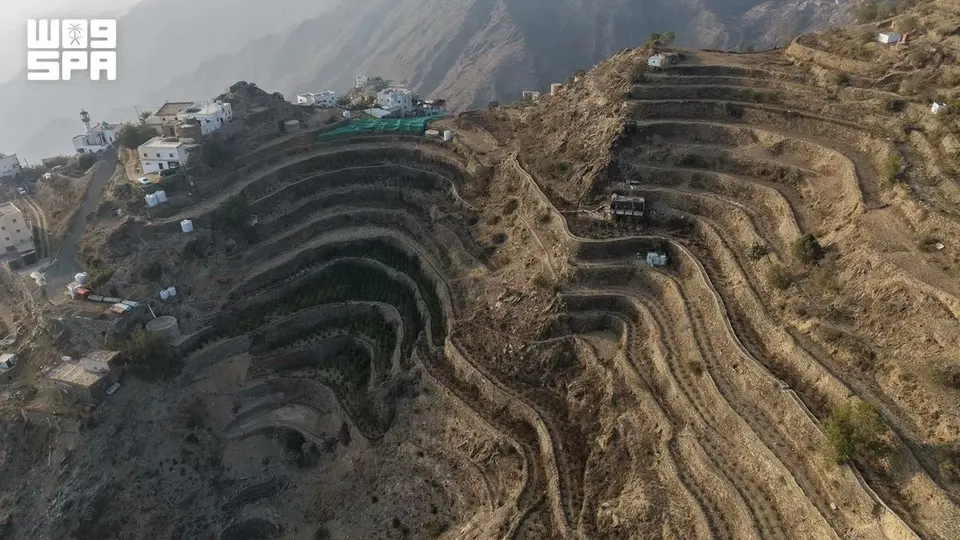
The stone terraces of Jazan are an outstanding example of sustainable agriculture in Saudi Arabia, built by generations of local farmers. These engineering structures transformed rocky slopes into fertile fields, preserving the environment and traditional knowledge.
The Engineering Marvel of Mountain Slopes
The Jazan terraces are the result of centuries of labor and a deep understanding of mountain agriculture. Each terrace is designed to hold soil on the slopes, preventing erosion and capturing precious rainwater. Saudi coffee, corn, millet, sesame, and aromatic plants are grown on the stone steps leading to the mountain tops. During the rainy season, the mountain slopes turn into green staircases, creating one of the most picturesque sights in the region. This system has proven its effectiveness through the perfect balance between human activity and natural processes.
Cultural and Ecological Heritage
The Jazan terraces are not just agricultural structures but a living testament to the historical development of the region. They reflect centuries of accumulated knowledge about the climate, soil, and water resources of the mountains. Each generation of farmers has improved this system, passing their experience on to descendants. The architectural perfection of these structures demonstrates a high level of engineering thought and practical skill among the locals. Today, the terraces serve as a bridge between the past and the future, showcasing the possibility of harmonious agricultural development without harming the environment.
Tourism and Agricultural Development
As the tourism sector in Jazan expands, the mountain terraces are attracting increasing attention both domestically and internationally. Travelers come to see ancient farming methods, experience the authentic atmosphere of rural life, and admire the breathtaking panoramas of mountain landscapes. The development of tourism in the region opens new opportunities for local communities—from selling traditional products to providing guided tour services. At the same time, the growing interest in these landscapes stimulates their preservation and restoration, ensuring long-term sustainability for both agricultural and tourism activities.
Why the Terraces Remain Relevant
In an era of intensive agriculture and rapid urbanization, the model of Jazan terraces offers a valuable lesson in long-term sustainability. The system does not require modern agrochemicals to maintain fertility, relies on natural water supply, and minimizes environmental damage. The youth from the region are increasingly returning to traditional methods, recognizing their economic and ecological value. International organizations are studying the Jazan experience as a model for other mountainous regions of the world. These terraces prove that innovation and tradition can successfully coexist, creating prosperity for current and future generations.
Frequently Asked Questions
How did ancient farmers build these terraces without modern machinery?
Farmers used manual labor, deep knowledge of geology and climate, as well as stone that was abundant on the mountain slopes. Each terrace was built with consideration of the slope angle, water flow direction, and soil type, which required years of experience and knowledge transfer between generations.
What crops are grown on the Jazan terraces?
On the terraces, Saudi coffee, corn, millet, sesame, and various aromatic plants are grown. These crops are well adapted to the mountainous climate of Jazan with its moderate temperatures and rich mountain soil that has accumulated nutrients for centuries.
Can the terrace system be applied in other mountainous regions?
Yes, the principles of the Jazan system have been adapted in other mountainous areas of Saudi Arabia and the world. However, success requires a deep understanding of local climate, soil, and water resources, as well as training communities in traditional methods of constructing and maintaining terraces.