
Historical Engraving of the Kaaba: A View from an Austrian Orientalist
The engraving of the Kaaba, created by Austrian orientalist Andreas Magnus Hunglinger in 1803. 🌴 @SaudiaUAE
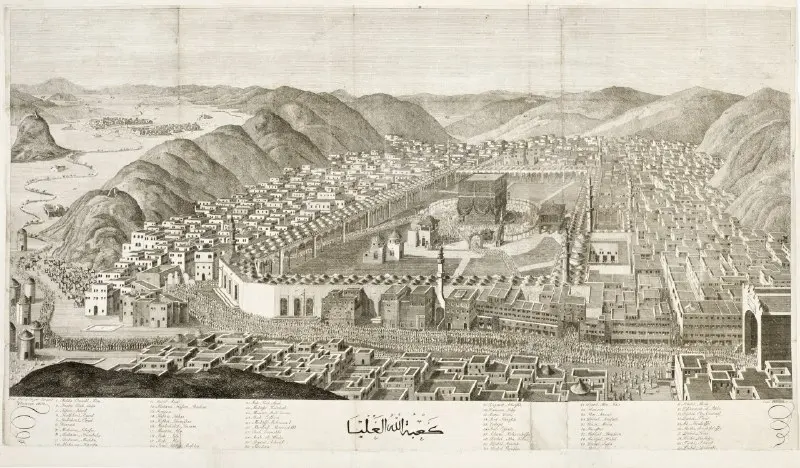
In 1803, Austrian orientalist Andreas Magnus Hunglinger created one of the rare European engravings of the holy site — the Kaaba. This historical artifact reflects European interest in Islamic culture and architecture at the beginning of the 19th century.
Who was Andreas Magnus Hunglinger
Austrian orientalist Andreas Magnus Hunglinger was part of a group of European scholars and orientalists from the late 18th to early 19th century who studied the East with scientific curiosity. At a time when direct travel for Europeans to Saudi Arabia was practically impossible, scholars relied on travelers' descriptions, merchants' accounts, and their own research of sources. His work on visualizing the Kaaba was an attempt to bring the distant holy site closer to a European audience.
The Significance of the Engraving in the Context of Intercultural Exchange
The 1803 engraving is a unique historical document that demonstrates the level of knowledge Europeans had about the sacred architecture of Islam. At a time when photography did not yet exist, engravings served as the primary means of visual communication and information dissemination. Such works helped European society better understand Islamic civilization and its sanctities, overcoming geographical and cultural barriers.
Architectural Details in the Historical Engraving
Hunglinger's engraving captured the distinctive features of the Kaaba: the cubic shape of the building, the black covering (kiswah) adorning the sanctuary, and the surrounding architecture of the Sacred Mosque. Even considering that the European artist had not seen the sanctuary in person, his work contains architectural elements that remain recognizable to this day. This attests to the thoroughness of the historical sources upon which Hunglinger relied.
Pilgrimage and the Historical Consciousness of the Modern Traveler
For modern pilgrims, familiarity with historical images of the Kaaba adds depth and a spiritual dimension to their journey. Understanding how this holy site was perceived and depicted in different eras helps to realize the timeless significance of the Kaaba in Islamic tradition. Pilgrimage becomes not only an act of faith but also an immersion into the centuries-old history of spiritual worship.
Frequently Asked Questions
When was the Kaaba engraving created by Hunglinger?
The engraving was made in 1803 by Austrian orientalist Andreas Magnus Hunglinger. It is one of the early European visual documents of the sanctuary.
How accurate is the engraving from an architectural perspective?
The engraving contains fairly accurate architectural details, despite being created based on secondary sources. The cubic shape, black covering, and overall composition correspond to the actual appearance of the Kaaba during that period.
What significance do such historical images hold for pilgrims?
Historical engravings help pilgrims better understand the cultural and spiritual heritage of the holy site, adding historical context to their personal pilgrimage experience and strengthening their connection to the centuries-old tradition.