
Ceramics 3600 Years Old: The Oldest Trademark
RIYADH — A study by the Heritage Commission has uncovered the oldest known concept of a trademark in pottery, dating back around 3,600 years, at Qurayyah Oasis in northwestern Saudi Arabia. Conducted in cooperation with the University of Vienna and published in the journal PLOS One, the study found that a village in the Tabuk region specialized in producing two-colored pottery, representing an early form of a “trademark” before the emergence of its modern concept. The study found that the pottery followed an organized manufacturing system, reflected in the consistency of its
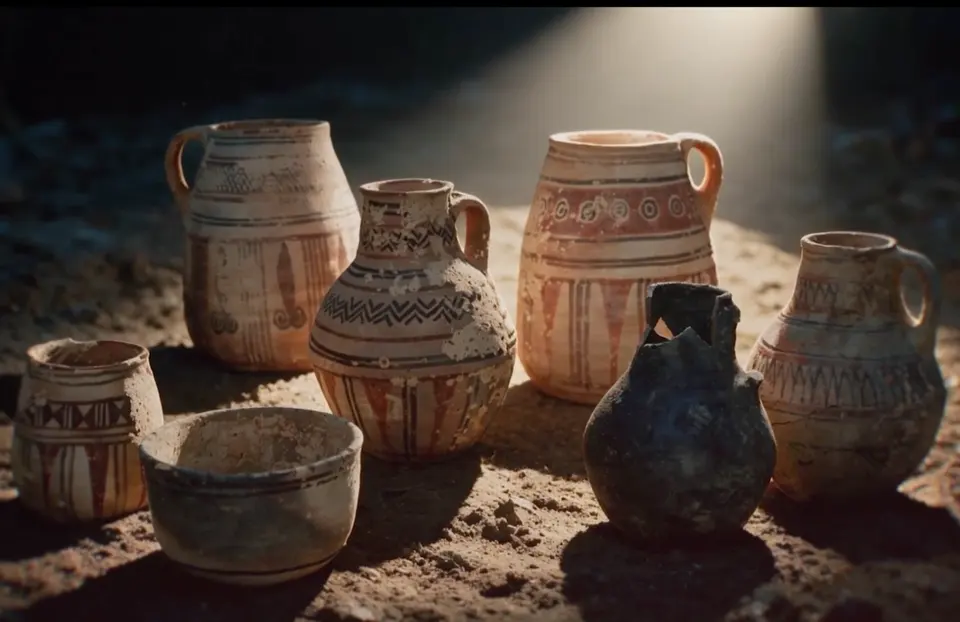
Scientists have discovered in Saudi Arabia the oldest prototype of a trademark — painted ceramics from the Qurayyah Oasis, created 3600 years ago. This proves that commercial branding has roots that go deep into antiquity.
Discovery in the Qurayyah Oasis
An international study conducted by the Heritage Commission of Saudi Arabia in collaboration with the University of Vienna revealed an astonishing fact: the inhabitants of the Qurayyah Oasis in the Tabuk region were creating ceramics about 3600 years ago that served as something akin to a modern trademark. The ceramics were two-colored, with a recognizable style and characteristic ornaments. The study was published in the prestigious journal PLOS One and confirms that ancient artisans deliberately created distinctive features for their products so that they would be recognizable in the market.
Organized Production System
The ceramics of Qurayyah were made within a clearly organized production system. Artisans used the same raw materials, applied the same processing techniques, and most importantly — applied repeating decorative motifs and paintings on the products. This consistency and uniformity were not accidental — they reflected the creators' desire to develop a recognizable visual image of their products. The findings indicate a high level of labor organization and an understanding of the importance of quality, recognizable products for success in trade.
Trade and Distribution
The demand for ceramics from Qurayyah was so great that it was exported far beyond the oasis. Artifacts have been found in southern Levant, Egypt, and northern Arabian Peninsula. The peak of production occurred about 3200 years ago, and the production continued until the Iron Age. This indicates that the reputation and recognizability of Qurayyah ceramics were strong enough to sustain demand for centuries. Ancient traders understood the value of branding just as modern entrepreneurs do.
Legacy of Ancient Branding
According to Dr. Majed Alonazi, director of the underwater cultural heritage department of the Heritage Commission, the discovery shows that commercial branding and product differentiation have deep historical roots. The creators of Qurayyah ceramics intentionally developed distinctive features — shapes, colors, ornaments — so that their product would be easily recognizable and distinguishable from competing products. This means that the concept of a trademark did not arise in modern times but has roots in northern Arabia during the Bronze Age, more than three and a half thousand years ago.
Frequently Asked Questions
How did scientists determine the age of the ceramics?
Dating was conducted using radiocarbon analysis (C14) of samples taken from the same kilns where the ceramics were produced. The analysis showed that the ceramics were created approximately between 1700 and 1500 BC — in the first half of the second millennium BC.
Why can the ceramics from Qurayyah be called a trademark?
The ceramics had a recognizable style with repeating ornaments, specific shapes, and a color palette. The artisans deliberately created these distinctive features so that their products would be easily recognizable in the market — just as modern trademarks distinguish one brand from another.
How far did the ceramics from Qurayyah spread?
Due to high demand, the ceramics from the Qurayyah oasis reached the southern Levant, Egypt, and northern regions of the Arabian Peninsula. This indicates developed trade and the reputation of the products on ancient trade routes.