
Abbasid-era Gold Jewelry Found in Qassim
The Saudi Heritage Commission announced the discovery of a collection of Abbasid-era gold jewelry at the archaeological site of Diriyyah in the Qassim region during the fourth season of excavation and survey work.
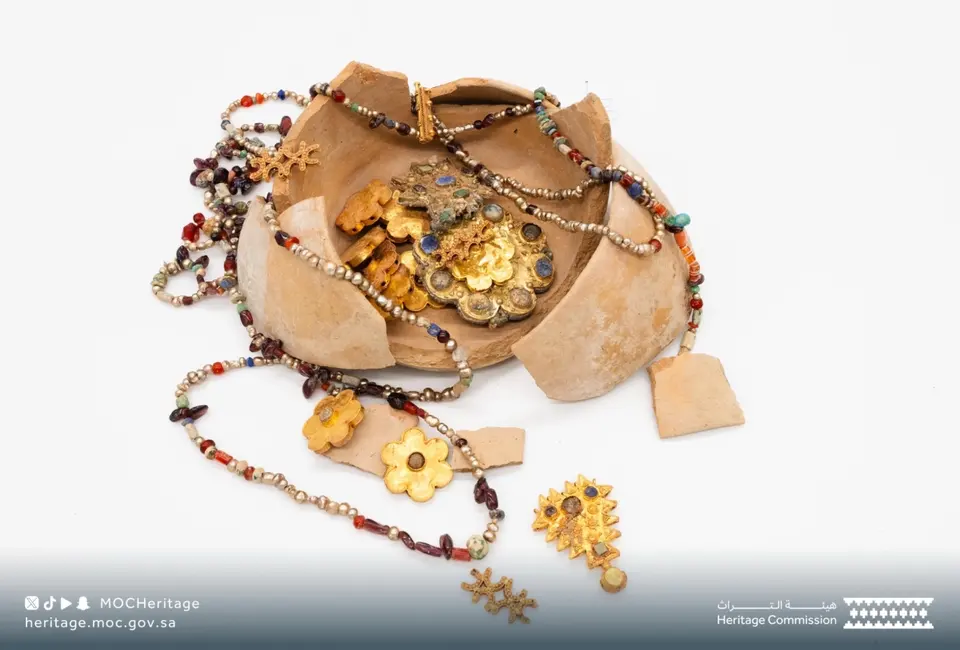
The Saudi Heritage Commission has discovered a collection of Abbasid-era gold jewelry at the archaeological site of Diriyyah in the Qassim region, revealing a rich history of trade routes and settlements.
Significant Archaeological Discovery
During the fourth season of excavations and surveys at the Diriyyah site, a unique collection consisting of 100 gold items was found. Each piece of jewelry is adorned with intricate floral and geometric patterns, indicating a high level of craftsmanship during the Abbasid era. In addition to the jewelry, scholars uncovered architectural remains, including stone foundations, mudbrick walls, pottery, and metal tools, which tell the story of ancient settlements.
Connection to Pilgrimage and Trade Routes
The findings indicate human settlement dating back to the end of the third century Hijri, highlighting the historical significance of this site. Diriyyah was located at the crossroads of important pilgrimage and trade routes that connected central Arabia with neighboring regions. This strategic position explains the concentration of valuable items and the diversity of artifacts found at the site. The gold jewelry served not only as adornment but also as symbols of status and wealth for the merchants and travelers passing through these lands.
Preservation of Cultural Heritage and Vision 2030
The discovery reflects the ongoing efforts of the Saudi Heritage Commission to document and preserve the archaeological heritage of the Kingdom. This work is closely linked to the cultural development goals outlined in the "Saudi Arabia Vision 2030" strategy. Systematic excavations and scientific study of ancient monuments contribute to a deeper understanding of the region's history and its role in the development of civilization. Protecting and promoting such heritage helps strengthen cultural identity and draw attention to the rich past of the Arabian Peninsula, making it accessible to researchers and travelers seeking to understand the true significance of the holy lands.
Methodology and Future Research
A comprehensive approach to excavations includes not only the extraction of artifacts but also the careful documentation of each find in the context of its location. This allows scholars to reconstruct the picture of life in ancient settlements and understand the social, economic, and cultural aspects of that era. Further excavation seasons are expected to uncover new layers of history that will enrich our knowledge of the Abbasid period and its influence on the development of the region.
Frequently Asked Questions
What is the historical significance of the found jewelry?
The Abbasid-era gold jewelry reflects a high level of craftsmanship and indicates the wealth of the settlement's inhabitants. They reveal trade connections and cultural exchanges that occurred along the ancient routes crossing Arabia.
When do the found artifacts date back to?
The findings date back to the end of the third century Hijri, corresponding to the period of the Abbasid Caliphate's flourishing. This time was characterized by significant economic development and intense trading activity in the region.
How are these discoveries related to the development of tourism in Saudi Arabia?
The unveiling of historical heritage enriches the cultural experience of travelers and pilgrims, allowing them to better understand the history and significance of the holy lands. Such discoveries contribute to the development of informed and culturally sensitive tourism in the region.