
11 species of skinks in Saudi Arabia: wonders of desert fauna
SAUDI ARABIA IS HOME TO 11 SPECIES OF SKINKS, INCLUDING THE "SAND FISH" Saudi Arabia has 11 species of skinks — lizards adapted to life in deserts, oases, and plains. Among them, the most famous is the "sand fish", capable of literally "swimming" in the sand and burrowing to a depth of 40 cm, escaping from predators and the scorching sun. These reptiles reach a length of 14 cm. They feed on insects, spiders, and plant matter, helping to naturally control pest populations and maintain ecological balance on the Arabian Peninsula.
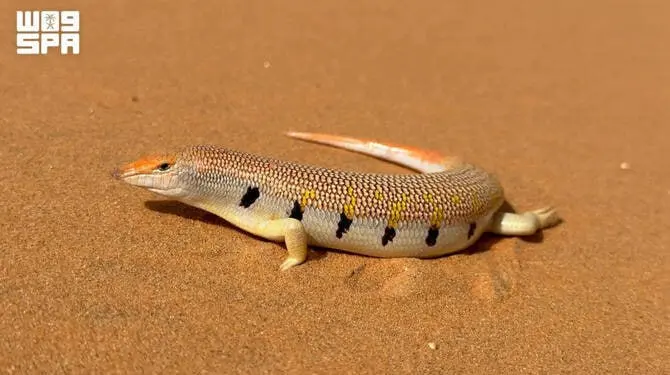
Saudi Arabia is home to 11 species of skinks, unique lizards adapted to the extreme conditions of the desert. Among them is the legendary "sand fish," capable of literally swimming in the sand.
What are skinks and where do they live
Skinks are a family of lizards that have evolved to survive in some of the harshest environments on the planet. In Saudi Arabia, these reptiles are found in deserts, oases, and plains where temperatures can reach extreme levels. Their smooth, shiny scales and streamlined bodies are the result of millions of years of adaptation to sandy landscapes. Skinks have learned to minimize moisture loss and efficiently utilize scarce resources, allowing them to thrive where other animals cannot survive.
“Sand fish” — the king of the desert
The most famous among Saudi skinks is the “sand fish” — an amazing creature that literally swims through the sand like a fish in water. It measures about 14 centimeters in length, and its body is perfectly adapted for underground movement. This lizard can burrow to a depth of up to 40 centimeters, hiding from predators and the scorching sun. Its movements are so natural and fluid that watching the “sand fish” becomes a mesmerizing spectacle — as if you are looking at an underwater world, only instead of water, there is sand.
Ecological role and diet
Skinks play an important role in the ecosystem of the Arabian Peninsula. They feed on insects, spiders, and plant matter, naturally controlling pest populations and maintaining ecological balance. Although these lizards may seem small and insignificant, their impact on the environment is significant. They are prey for larger predators, closing the food chain of the desert ecosystem. Studying the behavior and diet of skinks helps scientists better understand how life adapts to extreme conditions.
Why this is important for travelers
Saudi Arabia is primarily known as a pilgrimage center, but its natural diversity often remains in the shadows. Encountering the unique desert fauna — including these amazing skinks — allows for a deeper understanding of the beauty and complexity of Arabian landscapes. Exploring local wildlife enriches the journey, transforming it into a full-fledged experience that connects the spiritual and natural aspects of the region. Ecotourism and responsible wildlife observation are becoming increasingly popular ways to learn about the culture and nature of Saudi Arabia.
Frequently asked questions
Are skinks dangerous to humans?
No, skinks are completely harmless to humans. They are not venomous and are not aggressive. When encountering a person, they usually try to hide in the sand or under rocks. These are peaceful animals that prefer to avoid contact.
How does the “sand fish” breathe under the sand?
The “sand fish” has special valves in its nostrils that close when it dives into the sand, preventing particles from entering. Its breathing slows down, and its metabolism is adapted to underground living conditions, allowing it to remain below the surface for extended periods.
Where can you see skinks in Saudi Arabia?
Skinks are widespread across the Arabian Peninsula, especially in sandy deserts and oases. The best time to observe them is early morning or late evening when they are most active. Organized tours of nature reserves increase the chances of encountering these elusive animals.