
The Stoning Ritual: Meaning and Organization in Mina
MINA — A large number of Hajj pilgrims started leaving the tent city of Mina on Friday afternoon, the second day of Tashreeq, after performing the ritual of casting stones at three Jamarat, pillars symbolizing Satan. Chanting “Allahu Akbar'' (God is the greatest), pilgrims hurled stones first at Jamarat Al-Sugra (small pillar), then at Jamarat Al-Wusta (medium pillar) and lastly at Jamarat Al-Aqaba (largest pillar), seven times each. They prayed after stoning the first two pillars and quit quickly after stoning at the third Jamarat, following the tradition of the Prophet (peace be upon him). T
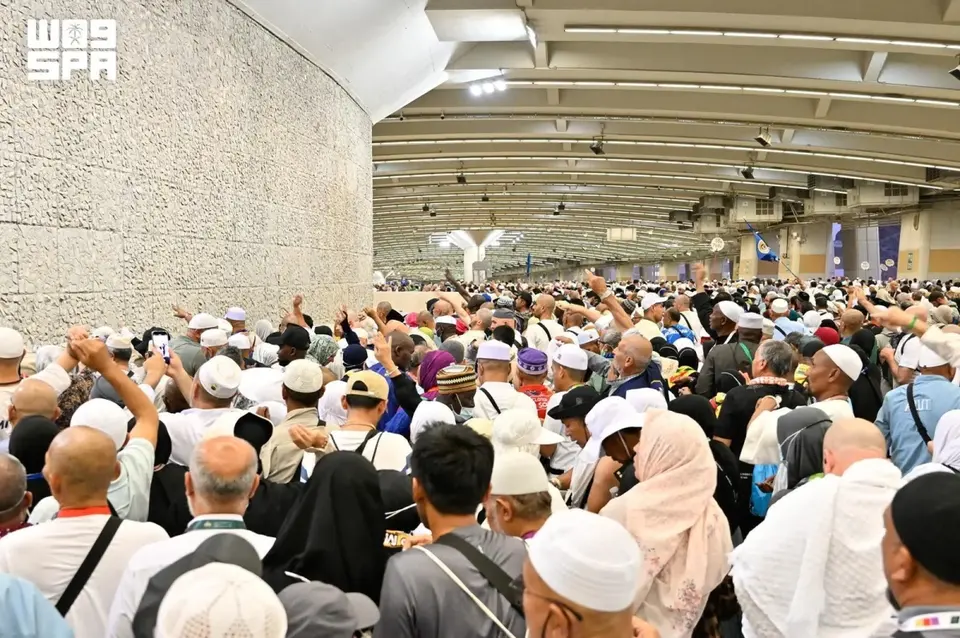
On the second day of Tashrik, Hajj pilgrims perform one of the most significant rituals — the stoning of three pillars in Mina. This ancient ritual symbolizes the renunciation of evil and following the example of the Prophet Ibrahim.
The Essence of the Stoning Ritual
The stoning ritual, or “Ramy al-Jamarat,” has its roots in the history of the Prophet Ibrahim. According to Islamic tradition, in three places in the valley of Mina, he was confronted by Iblis (Satan), trying to turn him away from the command of the Almighty to sacrifice his son Ismail. Each time, the Prophet Ibrahim threw stones at this place, driving away evil. Modern pilgrims repeat this sacred gesture by throwing seven stones at each of the three pillars: Jamarat al-Sugra (small pillar), Jamarat al-Wusta (medium pillar), and Jamarat al-Aqaba (large pillar). This ritual embodies the renunciation of all forms of evil and a promise of fidelity to the Creator.
Organization of Pilgrim Movement in Mina
During the second day of Tashrik, a spiritual and calm atmosphere prevails in Mina. The authorities of Saudi Arabia have developed a careful two-day schedule to avoid crowding of pilgrims on the Jamarat bridge. One-way routes are specially marked, ensuring the safety and comfort of millions of believers. After completing the ritual, pilgrims disperse: some return to their tents in Mina, while others head to Mecca for the farewell circumambulation around the Kaaba (Tawaf al-Wida). This organization helps to avoid crushes and disorder, creating conditions for the dignified performance of rituals.
When Can You Leave Mina
Pilgrims wishing to leave early have the right to depart from Mina before sunset on the second day of Tashrik. Those who stay in Mina overnight must perform the stoning ritual on the third day of Tashrik, on Saturday. Officially, Hajj concludes on the third day of Tashrik; however, believers are allowed to leave a day earlier. This flexibility in the schedule helps pilgrims plan their time according to personal circumstances and possibilities. A clearly organized departure schedule prevents road congestion and ensures a smooth flow of believers to the Holy Mosque.
Spiritual Meaning for Pilgrims
For each pilgrim, the stoning ritual is a profound spiritual experience. The cry “Allahu Akbar” (God is the Greatest), resonating from thousands of believers, creates a powerful atmosphere of unity and devotion. This ritual reminds of the eternal struggle between good and evil, the necessity of constant vigilance, and the renunciation of temptations. Pilgrims leave Mina with a sense of spiritual purification and renewal, understanding that through the performance of this ritual, they follow the path of the great prophets and join millions of believers who have performed Hajj throughout the centuries.
Frequently Asked Questions
Why do pilgrims throw stones at three pillars instead of one?
The three pillars symbolize the three places in the valley of Mina where the Prophet Ibrahim was confronted by Iblis. Each place represents different attempts by the devil to turn the prophet away from the command of the Almighty. By repeating this gesture, pilgrims affirm their rejection of evil in all its manifestations.
How many stones should be thrown at each pillar?
Exactly seven stones must be thrown at each of the three pillars. The number seven has sacred significance in Islamic tradition. The stones should be small, about the size of a pea, to avoid injuring other pilgrims.
Can the stoning ritual be performed on another day?
The ritual can be performed on the second or third day of Tashrik. Those in a hurry leave after the first day of stoning on the second day. Others perform the ritual on the third day and then leave Mina. Both options are permitted by Islamic law.