
The Revival of the Onager in Saudi Arabia After 100 Years of Absence
TABUK — The first birth of onager (Equus hemionus) on Saudi soil in more than 100 years was recorded at Prince Mohammed bin Salman Royal Reserve, thanks to the intensive Saudi wildlife conservation efforts. These efforts mark the return of a species that had disappeared from the deserts of the Arabian Peninsula for over a century. The reserve noted that the male onager was born in June 2025 as part of the Arabian rewilding program launched to reintroduce 23 native species to their former natural habitats. The birth has only now been announced after the onager successfully completed its first 1
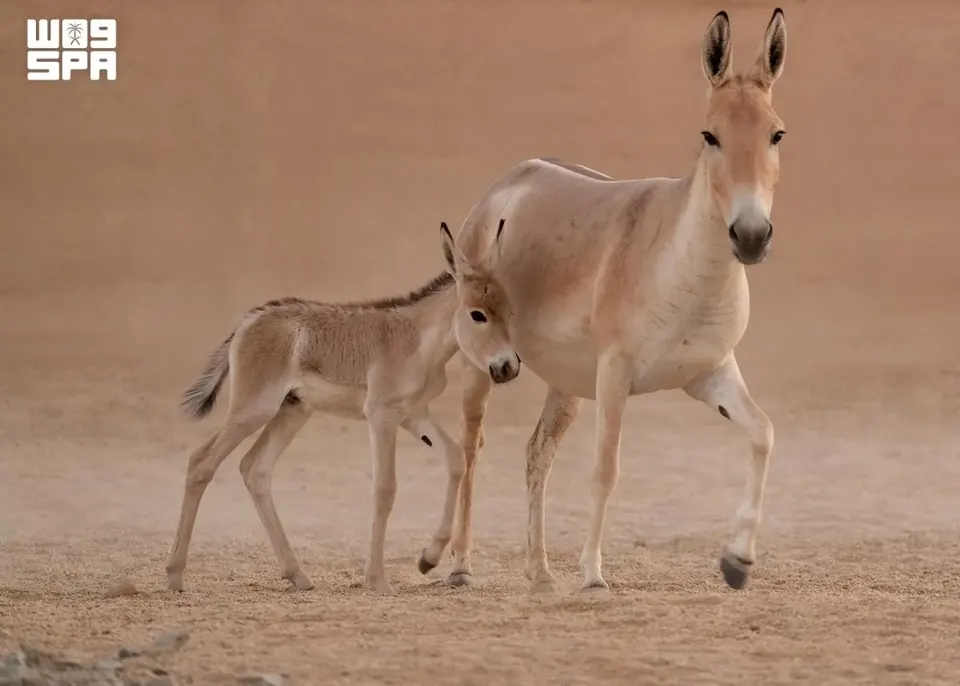
The first onager was born in the Prince Mohammed bin Salman Royal Reserve in Saudi Arabia after more than a century. This event symbolizes the success of a large-scale program to restore endangered species in their natural habitats.
Historic Event in the Tabuk Reserve
In June 2025, a male onager, one of the rarest animals on the planet, was born in the Prince Mohammed bin Salman Royal Reserve, an event that had not occurred for over a hundred years. The announcement of this birth was made only a year later, after the young onager successfully survived the critical first year of life, when survival rates do not exceed 50 percent. This birth is the result of intensive efforts by Saudi Arabia to conserve wildlife and restore species that have disappeared from the deserts of the Arabian Peninsula for over a century.
Relocation and Species Restoration Program
The birth of the onager is part of the ambitious "Arabian Revival" program launched to return 23 species of animals that once inhabited the region to their natural habitats. The reserve is undertaking special work to enhance the genetic diversity of the onager population. The new female is currently undergoing quarantine before joining the main herd, which will be sourced from Jordan. The plan includes creating two separate breeding groups to ensure long-term viability, genetic diversity, and adaptability of the population to environmental conditions.
Critical State of the Species and Prospects for Rescue
The onager is on the brink of extinction. According to the International Union for Conservation of Nature, fewer than 600 individuals of this species remain in the wild. In 2025, the conservation status of the onager was elevated to "Critically Endangered." Projections indicate that without urgent measures, the population could decline by 90 percent by 2050. The birth of the first onager on Saudi soil in a century offers hope that these animals can be saved from complete extinction through targeted restoration programs and international cooperation.
Achievements and Future Plans
The reserve expects the birth of two more onagers this upcoming winter, indicating the growing success of the species conservation program. The initiative reflects a forward-thinking approach to environmental conservation that goes beyond traditional methods and is based on creating national and regional partnerships. Such collaboration allows for the development of comprehensive solutions for wildlife conservation and the restoration of ecosystems in the Arabian Peninsula. Saudi Arabia demonstrates its commitment to ecological restoration by creating conditions for the return of extinct species to their historical ranges.
Frequently Asked Questions
What is an onager and why is it so rare?
The onager (Equus hemionus) is a wild donkey that once inhabited the deserts of the Arabian Peninsula. The species disappeared from the region over a hundred years ago due to hunting and habitat loss. Today, fewer than 600 individuals remain in the wild, and the species is classified as critically endangered.
What is the role of the royal reserve in saving onagers?
The Prince Mohammed bin Salman Royal Reserve implements the "Arabian Revival" program to restore 23 species of animals. The institution conducts selective breeding work to enhance genetic diversity and plans to create two separate breeding groups of onagers to ensure the long-term survival of the species.
When was the first onager born and why was the announcement delayed?
The male onager was born in June 2025, but the announcement was made only a year later. This was done because the first year of life is considered a critical survival period, during which survival rates do not exceed 50 percent. After successfully passing this period, it became possible to confirm the success of the program.