
Rare Manuscript Quran: A Family Treasure
A RARE MANUSCRIPT QURAN PASSED DOWN IN A FAMILY FOR GENERATIONS A Reddit user shared photos of an ancient handwritten Quran that has been preserved in their family for many generations. The Mushaf contains the full text of the Holy Quran, all handwritten in ink, with diacritics preserved using red and other colors for ease of reading. Particular interest lies in the book's binding, crafted in the traditions of the Maghreb. The soft leather cover is adorned with embossing and features a characteristic flap that wraps around the book and secures it in a closed position. In the center is an almond-shaped ornament—one of the classic elements of North African Quran bindings. The manuscript shows significant wear over time, indicating its use.
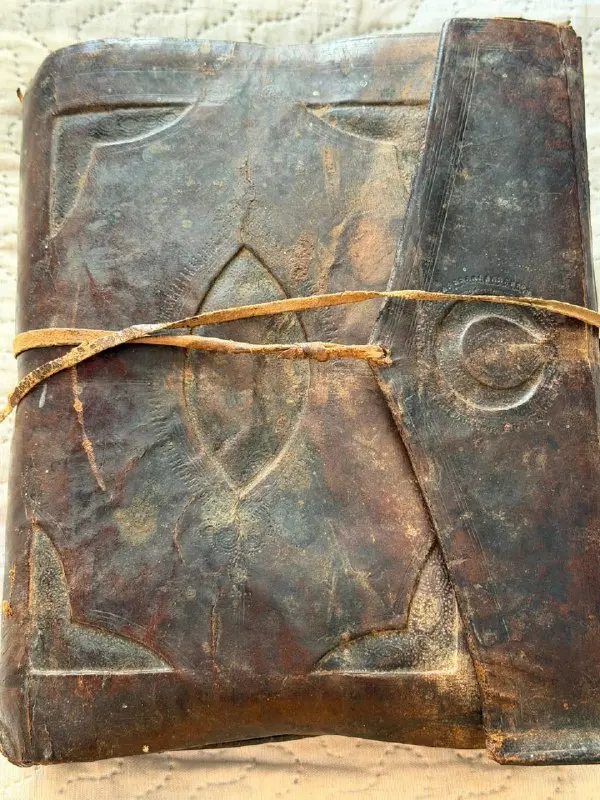
A family relic, handwritten generations ago, tells a story of deep faith and craftsmanship. The manuscript Mushaf is not just a book, but a living testament to cultural heritage.
The History of the Manuscript Quran in Family Memory
Handwritten Qurans passed down from generation to generation are rare and valuable artifacts. Each such Mushaf is the result of years of labor by scribes who reverently reproduced the sacred text. When a manuscript remains within one family for centuries, it becomes not only a religious text but also a family history, a repository of memory and intergenerational connection. The wear of the pages and the scuffs on the binding tell of how many times this book has been opened for reading, prayer, and reflection.
The Craftsmanship of Scribes and the Art of Decoration
The full text of the Holy Quran was handwritten in black ink with special precision. The diacritics—auxiliary signs for correct pronunciation—were done in red and other colors, making reading and learning easier. The binding is done in the Maghribi tradition, reflecting North African craftsmanship. The soft leather cover is adorned with embossing and features a characteristic flap that wraps around the book. In the center is an almond-shaped ornament—a classic element of North African bindings, symbolizing the unity of beauty and functionality in Islamic art.
Preserving Heritage for Future Generations
Manuscript Qurans require careful handling and proper storage. Humidity, temperature fluctuations, and direct sunlight can damage the ink and parchment. Families that own such relics often face a dilemma: to use the sacred text, risking its wear, or to keep it safe, limiting access? Some choose to create photocopies or digital archives, preserving the original for history. Such artifacts are a window into the past—they showcase the level of craftsmanship, typographic traditions, and cultural values of the era in which they were created.
Spiritual Tourism and Discovering Cultural Heritage
Interest in manuscript Qurans and Islamic art is growing among travelers and researchers. Museums in Cairo, Istanbul, Cordoba, and other cities house unique collections of medieval Mushafs. Pilgrims and tourists visiting these places have the opportunity to touch the living history of faith and culture. Such visits deepen the understanding of Islamic civilization, its contributions to the development of writing, art, and science. They remind us that cultural heritage is not just a museum exhibit, but the breath of history that continues to inspire and unite people.
Frequently Asked Questions
How old can a manuscript Quran be?
Manuscript Qurans have been created for over a thousand years. The oldest date back to the 7th–8th centuries, but most known collections date from the 9th–16th centuries. The age is determined by the style of writing, materials, and historical documentation.
Why did scribes use different colors of ink?
Black ink was used for the main text, while red and other colors were used for diacritics, which help with correct pronunciation and understanding of the text. This made reading easier, especially for learners.
Where can rare manuscript Qurans be seen?
Major museums of Islamic art in Cairo, Istanbul, Baghdad, Cordoba, and other cities house collections of handwritten Mushafs. Many of them are available for public viewing, and some are exhibited at rare book and artifact exhibitions.