
Mina: how pilgrimage is organized for millions of believers
With the arrival of the first waves of pilgrims since dawn of the Day of Tarwiyah on Dhul Hijjah 8, Mina reveals itself as one of the world's most extraordinary examples of seasonal organization.
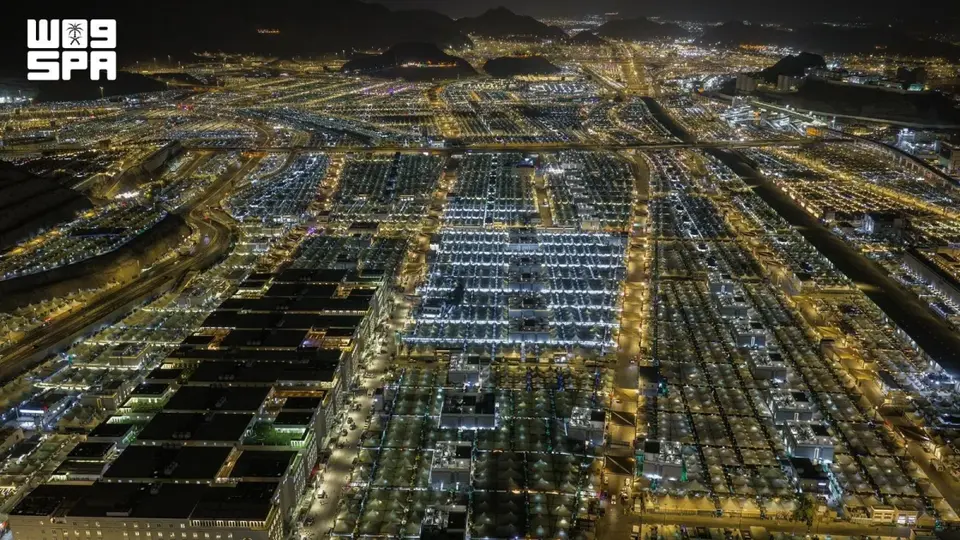
On the Day of Tarwiyah, the valley of Mina transforms into a unique city, where modern crowd management technologies and infrastructure serve millions of pilgrims with unprecedented efficiency.
A city born in a few days
Mina is not just a geographical location on the map of Saudi Arabia. It is a phenomenon of organization that repeats every year with incredible precision. In just a few days, an ordinary valley in the heart of Mecca transforms into a fully functional metropolis capable of accommodating over 2.6 million people. White tents cover the slopes over an area of about 2.5 million square meters, each designed according to the strictest safety standards. This is not improvisation — it is the result of years of planning and engineering preparation.
The technology behind faith
Behind the impressive architecture of the tents lies a complex management system. Mina functions as a "smart seasonal city," where power supply, cooling, crowd flow management, and security control systems are integrated. Every pedestrian route is carefully planned, and every transition from tents to the Jamaraat sanctuaries is optimized. A real-time system tracks the movement of pilgrims, preventing congestion and ensuring safety. Medical centers, food points, and security services operate synchronously, like the organs of a single organism.
Humanism on a scale of millions
Every year, Mina improves. This Hajj, the focus is on the concept of "urban humanism" — shaded rest areas have been expanded, infrastructure has been improved, and pedestrian paths have been redesigned for greater flexibility and convenience. This means that pilgrims receive not only a place for prayer but also an environment that respects their physical and spiritual comfort. Such an approach to organizing mass gatherings is rarely seen in the world and serves as a model for other events.
The rhythm of a city living by faith
The uniqueness of Mina lies in its rhythm of life. For several days, the city lives at peak activity — millions of people move in prayers, perform rituals, and interact. Then, with the completion of the Hajj rituals, Mina descends into complete tranquility. Tents are dismantled, people leave, and the valley returns to its normal state. But this cycle is not an end — it is preparation for the next year. Each season brings new technological solutions, new engineering approaches, and a new level of excellence in organization.
The evening landscape of faith
As the sun sets, lights turn on, illuminating the paths through Mina. Pilgrims move between their tents and sanctuaries, creating a scene that is hard to describe in words. It is a spectacle of humanity united by faith, supported by modern technology and logistics. The Kingdom of Saudi Arabia has invested enormous resources to ensure that this gathering is safe, convenient, and worthy of the moment's grandeur. This demonstrates how high technology and deep spirituality can coexist in harmony.
Frequently asked questions
How many tents are there in Mina and what is their total area?
The infrastructure of Mina covers approximately 2.5 million square meters and can accommodate over 2.6 million pilgrims. Each tent is designed according to high standards of safety and comfort.
How are the flows of pilgrims managed in Mina?
Mina operates as a smart city with integrated crowd management systems, real-time flow tracking, optimized pedestrian routes, and coordination of security, healthcare, and logistics services to prevent congestion.
What is the concept of "urban humanism" in Mina?
This is an approach to the development of Mina's infrastructure that focuses on the comfort of pilgrims: expanding shaded rest areas, improving landscaping, and creating flexible and convenient pedestrian paths for respectful treatment of the faithful.