
July in Saudi Arabia: the hottest month of the year
RIYADH — Saudi Arabia is entering the peak of its summer season, with long-term climate records indicating that July is typically the hottest month of the year across the Kingdom. According to an analysis released by the National Center for Meteorology (NCM) of July weather patterns between 1985 and 2025, the month records an average temperature of 33.1°C — with an average maximum temperature of 40.3°C — and an average rainfall of 3.34 mm, based on the 1991–2020 climate baseline. Geographically, average temperatures during July are highest across the Eastern Province and lar
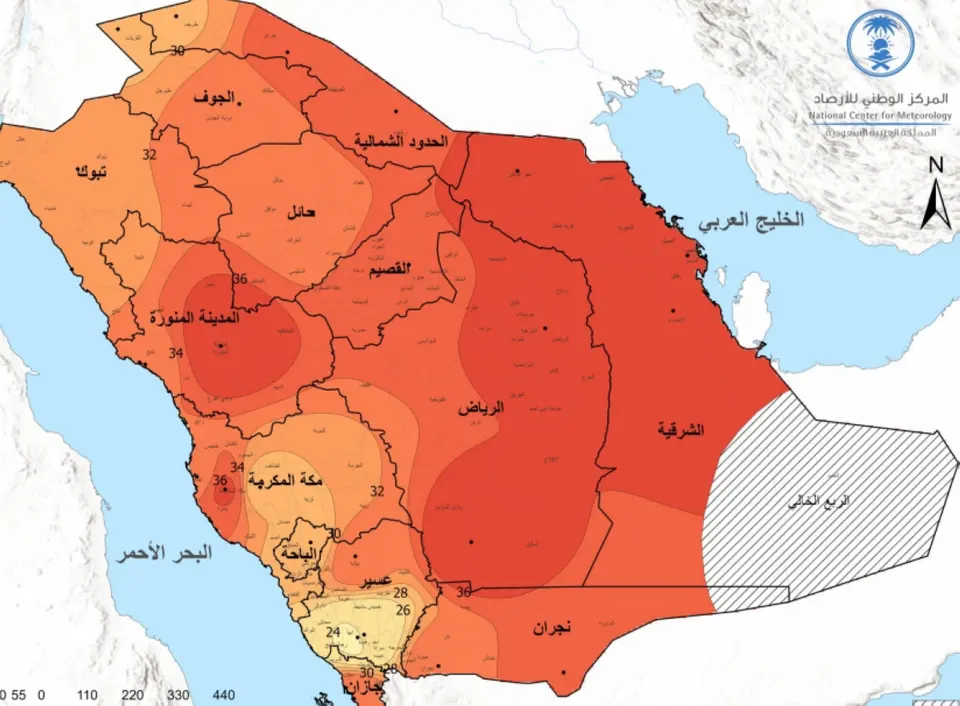
An analysis of 40 years of meteorological data shows that July is the peak of the summer season in Saudi Arabia, with an average temperature of 33.1°C and a maximum of 40.3°C. In the eastern provinces, temperatures exceed 44°C.
What 40 years of climate data say
The National Center of Meteorology of Saudi Arabia analyzed July weather patterns from 1985 to 2025. The results show a consistent trend: July remains the hottest month in the kingdom for four decades. The average temperature is 33.1°C, while the average maximum temperature is 40.3°C. Meanwhile, precipitation averages only 3.34 mm, highlighting the dryness of the period. This data is based on the climate baseline from 1991 to 2020 and provides a clear picture of what to expect during the summer period.
Geographical distribution of heat by regions
Temperatures in July are distributed unevenly across the country. The highest readings are observed in the Eastern Province and central areas of Saudi Arabia, where maximum temperatures exceed 44°C. Particularly extreme conditions occur in cities like Al-Ahsa, Rafha, and Dammam. The coolest regions are the southwestern mountainous areas: Asir, Al-Baha, and Taif, where temperatures are significantly lower than the overall royal average. This geographical differentiation is important for understanding climate conditions in different parts of the country.
Extreme temperature records
Observation history records astonishing temperature records. In 2017, the highest average maximum temperature for July in the last decade was recorded at 42.01°C, while in 2022, the figure was lower at 39.66°C. Absolute records are even more extreme: Al-Ahsa reached 51.3°C (July 12, 2024), Rafha — 51.1°C (July 30, 2020), Dammam — 50.8°C (July 12, 2024). Al-Ahsa holds the unfortunate record for the number of days with temperatures above 45°C — an average of 24 days in July.
Precipitation and humidity: regional differences
Despite the overall dryness of July, precipitation in the kingdom is distributed extremely unevenly. The majority of rainfall is concentrated in the southwestern and southern mountainous regions — Asir, Jazan, and Al-Baha. The monitoring station in Khamis Mushait records the highest average rainfall in July: 22.5 mm, followed by Abha with 22.0 mm and Jazan with 16.4 mm. In the central, northern, and eastern regions of the kingdom, there is virtually no rainfall in July, exacerbating the dryness of the season and requiring special attention to hydration and sun protection.
Preparing for a summer trip
For travelers and pilgrims planning to visit Saudi Arabia in July, it is critically important to understand the climatic realities. It is necessary to use a high level of sun protection (SPF 50+), wear light, breathable clothing in light colors, and a head covering. Drink enough water — in such conditions, 3–4 liters a day is recommended. Plan activities for early morning or late evening, avoiding peak sun hours from 11:00 AM to 4:00 PM. It is especially important to monitor your well-being and seek help immediately at signs of heatstroke.
Frequently Asked Questions
What month is the hottest in Saudi Arabia?
July is the hottest month in the kingdom according to 40 years of meteorological data. The average maximum temperature is 40.3°C, and in some regions, it exceeds 50°C.
Which regions of Saudi Arabia are the hottest in July?
The Eastern Province and central areas of the country are the hottest. Al-Ahsa, Rafha, and Dammam regularly record temperatures above 50°C, while the mountainous areas of Asir and Al-Baha are significantly cooler.
Does it rain in Saudi Arabia in July?
July is a dry month. Most precipitation is concentrated only in the southwestern mountainous regions (Asir, Jazan, Al-Baha), where 16–22 mm of rain falls. In other areas, there is virtually no precipitation.