
Healthcare at Holy Sites: Readiness for Hajj Season 2026
Minister of Health Fahad Al-Jalajel inspected a number of healthcare facilities at the holy sites operated by the private sector.
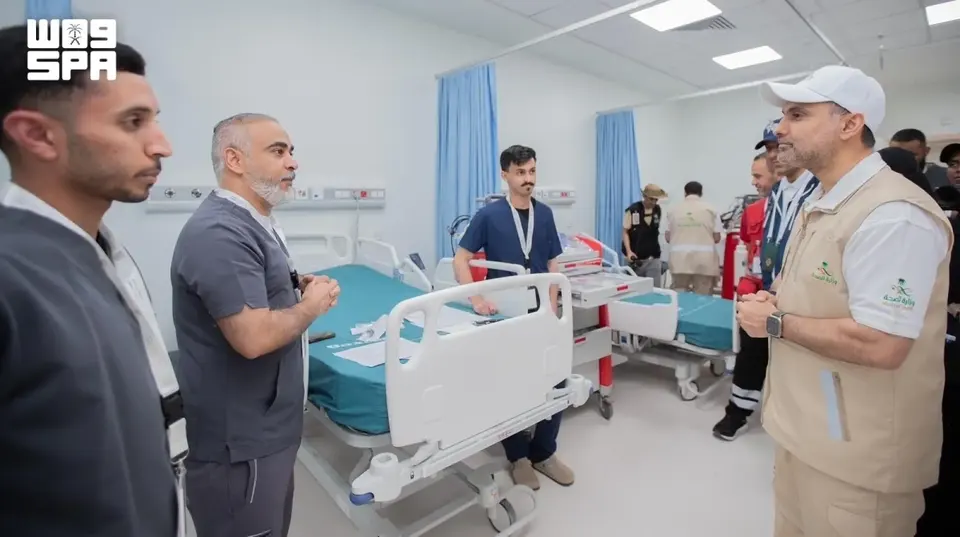
The Minister of Health of Saudi Arabia inspected medical facilities at the holy sites, checking their readiness for the upcoming Hajj season and ensuring the quality of services for pilgrims.
Major Modernization of Medical Centers
Minister Fahad Al-Jalajel reviewed several key medical facilities, including the Mina-2 emergency hospital, whose capacity has increased by 100 percent this year to 400 beds. The expansion project included the construction of three additional floors and the creation of a vital complex with a total area of 18,000 square meters. The hospital is now connected to the Mina-1 emergency hospital by a special bridge to ensure seamless provision of integrated services to pilgrims throughout the rituals.
Specialized Facilities for Pilgrim Safety
During the inspection, the minister visited the Namira General Hospital, which has 114 beds, including an intensive care unit and special beds to assist with heat strokes—a common issue in the holy sites. The Namira pedestrian hospital with 50 beds was also inspected. Special attention was given to the implementation of modern technologies: the minister remotely checked a pilgrim's vital signs through smartwatches connected to the King Abdullah Medical City system, demonstrating the integration of digital solutions in healthcare at the holy sites.
Private Sector and Service Integration
The involvement of private medical organizations in preparations for the Hajj season is seen as a strategic enhancement of the public healthcare system. This coordination between public and private institutions provides specialized services and expands operational capabilities. This approach aligns with the goals of the Healthcare Sector Transformation Program and the Pilgrim Experience Improvement Program, which are part of Saudi Arabia's Vision 2030.
Safety and Peace as a Priority
The main goal of the inspection is to ensure that pilgrims receive comprehensive, high-quality medical services and can perform sacred rituals in complete safety and peace. Rapid response to medical emergencies, the availability of sufficient specialists, and modern equipment help minimize health risks in crowded conditions. The minister's inspection confirmed that all facilities are ready for the upcoming season.
Frequently Asked Questions
What is the total capacity of medical facilities at the holy sites?
The Mina-2 emergency hospital has 400 beds, the Namira hospital has 114 beds, and the Namira pedestrian hospital has 50 beds. The total capacity of specialized facilities has been significantly expanded to serve pilgrims during the Hajj season.
What technologies are used to monitor the health of pilgrims?
Remote monitoring systems using smartwatches integrated with the King Abdullah Medical City have been implemented. This allows medical staff to track pilgrims' vital signs in real-time and provide timely assistance.
Why is coordination between public and private healthcare important?
Private medical organizations provide specialized services and additional capacity, allowing the public system to cope with the large influx of pilgrims. Integration ensures a quick response to emergencies and comprehensive care.