
40 births of Arabian gazelles in the royal reserve
RAFHA — More than 40 Arabian sand gazelle births recorded at Imam Turki bin Abdullah Royal Nature Reserve during the first quarter of 2026. This reflects the success of endangered species reintroduction programs carried out by the Imam Turki bin Abdullah Royal Nature Reserve Development Authority and the effectiveness of efforts to conserve biodiversity and enhance ecosystem sustainability within the reserve.The authority stated that the births were documented through continuous field monitoring conducted by specialized teams. It noted that the high rate of natural reproduction among Arabian s
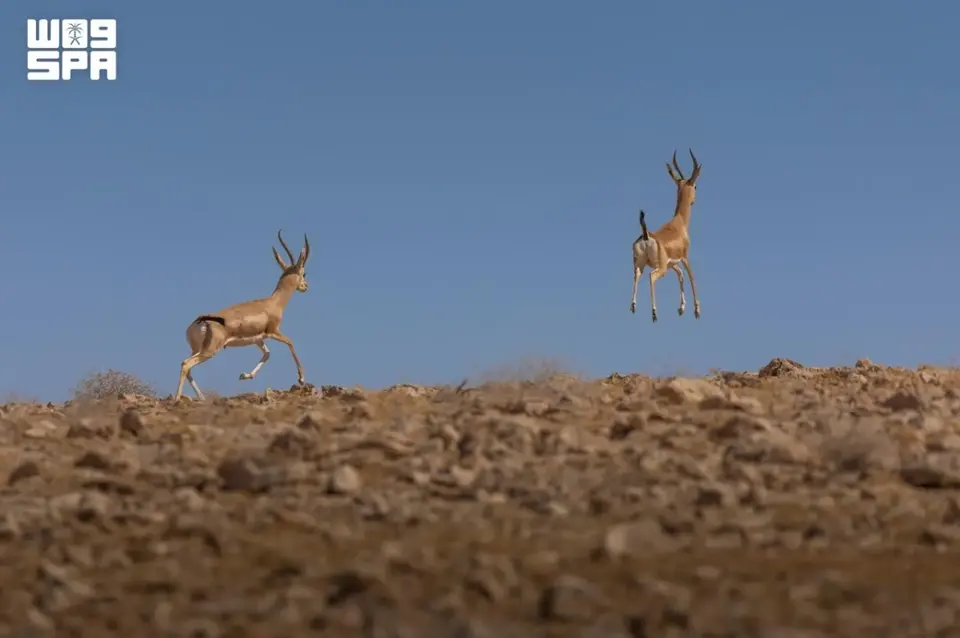
In the Imam Turki bin Abdullah Reserve in northeastern Saudi Arabia, more than 40 births of Arabian gazelles were recorded in the first quarter of 2026. This indicates the success of endangered species recovery programs and the effectiveness of conservation measures.
Success of population recovery programs
The birth of more than 40 gazelle calves is not just a statistic. It is proof that years of efforts to save the species are yielding real results. Specialists from the Imam Turki bin Abdullah Royal Nature Reserve Development Authority continuously monitor the population status through field studies. The high level of natural reproduction shows that the habitat in the reserve meets the needs of the gazelles, and the conditions promote their stable breeding and survival.
From managed breeding to the wild
A key point is the transition from reliance on managed breeding programs to self-sustaining reproduction in the wild. This means that the reserve's ecosystem has reached the necessary level of stability. Animals no longer require constant human assistance for breeding. Natural reproduction is one of the most significant indicators of the success of population recovery programs. It confirms that the conditions for the long-term growth of the species' numbers have finally been established.
The story of saving the Arabian gazelle
The Arabian gazelle was once a symbol of the Arabian Peninsula. However, over the past decades, its population has sharply declined due to poaching and environmental changes. This prompted authorities to launch specialized conservation and relocation programs for the species. The Imam Turki bin Abdullah Reserve is the second largest terrestrial nature reserve in Saudi Arabia, covering more than 91,500 square kilometers. It spans five administrative regions and features diverse natural habitats and unique geographical formations.
Biodiversity and ecosystem resilience
The success of the gazelles reflects the broader success of the entire biodiversity conservation program in the reserve. The diverse topography and natural landscapes of the reserve create suitable conditions for many species of animals and plants. Each gazelle birth is a step towards restoring the ecological balance of the region. Habitat management and species protection programs demonstrate that with the right approach, even endangered species can return to prosperity. This is an inspiring example of how conservation initiatives can change the fate of a species.
Frequently asked questions
Why was the Arabian gazelle on the brink of extinction?
The gazelle population declined due to excessive hunting and environmental changes over decades. Poaching and habitat loss brought the species to a critical state, necessitating urgent recovery measures.
How do specialists monitor the gazelle population in the reserve?
Continuous monitoring is conducted by specialized field teams. They document births, the health status of the animals, and the quality of their habitat using modern observation methods and population data analysis.
What does natural reproduction mean for the future of the species?
Natural breeding in the wild is a key sign of the success of recovery programs. It shows that gazelles are no longer dependent on managed breeding and are capable of sustaining their population in natural conditions.