
Updating the Kiswa of the Holy Kaaba: Tradition and Craftsmanship
On the eve of the Islamic New Year, preparations have begun to replace the Kiswa (cover) of the Holy Kaaba. Islam's holiest shrine will be adorned with the new Kiswa on Tuesday morning, the first day of Muharram, 1448 AH.
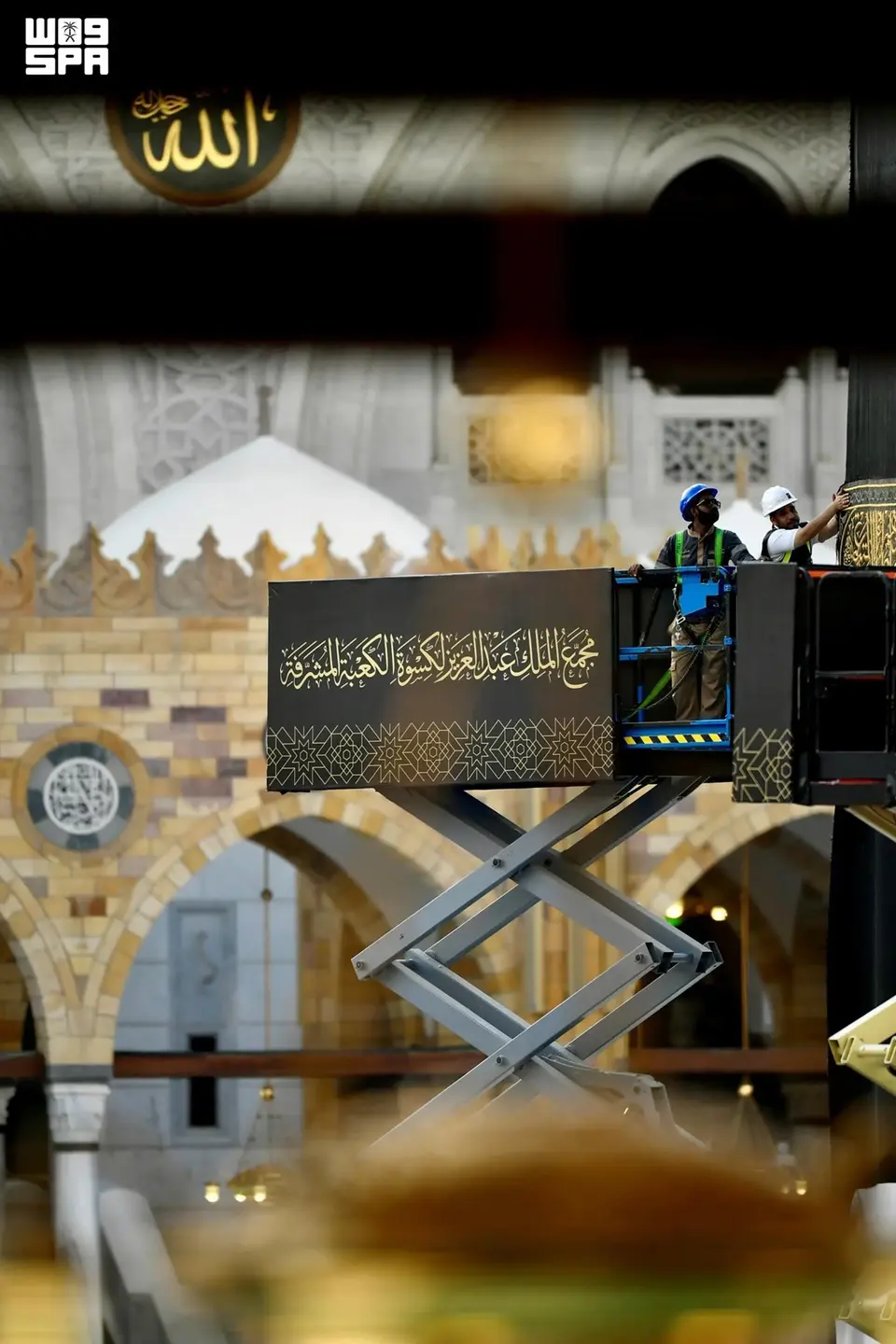
On the eve of the Islamic New Year, preparations have begun in Mecca for the replacement of the Kiswa — the sacred covering of the Holy Kaaba. The new covering will be installed on Tuesday, the first day of Muharram, as part of an ancient tradition that combines spiritual significance with the highest level of craftsmanship.
What is the Kiswa and its Spiritual Significance
The Kiswa is a sacred black covering that adorns the Holy Kaaba, the holiest site in Islam. For millions of pilgrims from around the world, the sight of this majestic covering, embellished with golden and silver embroidery featuring verses from the Quran, becomes one of the most touching moments of their pilgrimage. The Kiswa symbolizes reverence for the House of Allah and serves as a visual expression of the unity of Muslims. The replacement of the Kiswa at the beginning of the Islamic year is not just maintenance; it is a deeply meaningful ritual that reminds pilgrims of the continuity of faith and traditions.
Craftsmanship and Materials of the Highest Quality
The production of the new Kiswa is a complex process that requires exceptional craftsmanship and attention to detail. Specialists use 825 kilograms of natural silk, 47 rolls of black silk for the outer covering, 400 kilograms of cotton for the inner lining, as well as 60 kilograms of pure silver and 120 kilograms of gold-plated silver for embroidery. Each material undergoes strict testing in the complex's laboratories to ensure compliance with the highest quality standards and durability in various climatic conditions. Quranic verses and Islamic ornaments are hand-embroidered using gold and silver threads, demonstrating the level of Saudi craftsmanship and commitment to preserving artistic heritage.
The Replacement Process: Organization and Responsibility
The replacement of the Kiswa is a coordinated operation led by the General Presidency for the Affairs of the Grand Mosque and the Prophet's Mosque through the King Abdulaziz Complex for the Production of the Kiswa. A specialized Saudi team of skilled artisans begins the process by lifting the old Kiswa, removing the gold-plated decorations and decorative elements, and then installing the new covering. The new Kiswa is transported from the complex to the Grand Mosque through an integrated operational system that meets international safety standards. The entire process is carried out with the utmost precision and respect for the sanctity of the moment, ensuring that pilgrims see the Kaaba in all its beauty and grandeur.
Pilgrimage and Perception of the Sanctuary
For pilgrims, the updated Kiswa is a reminder of the greatness of Allah and the unity of the entire Muslim community. The moment a pilgrim first sees the Holy Kaaba in its new covering often becomes a turning point in their spiritual journey. This sense of sanctity and connection to a centuries-old tradition enhances the emotional impact of the pilgrimage. Each embroidered line of the Quran on the Kiswa reminds the faithful of the words of the Almighty, while the golden patterns symbolize the greatness and glory of the House of Allah.
Frequently Asked Questions
How often is the Kiswa of the Holy Kaaba replaced?
The Kiswa is updated once a year, at the beginning of the Islamic year (1 Muharram). This tradition has been maintained for centuries and is an important part of the preparations for the new year in the Islamic calendar.
What part of the old Kiswa is distributed after replacement?
After the old Kiswa is removed, its pieces are often distributed among Islamic institutions, museums, and dignitaries as a relic. This allows more believers to connect with the history and sanctity of the Holy Kaaba.
How long does it take to produce a new Kiswa?
The process of producing the Kiswa takes several months and includes stages of design, printing, hand embroidery, and final assembly. All work is carried out with the utmost care to ensure impeccable quality of the covering.