
The Legacy of Calligrapher Bukhari in the Golden Threads of the Kiswa of the Kaaba
Over a span of 100 years, the Holy Kaaba's Kiswa (cover) has been shaped by the skill and dedication of many craftsmen who contributed to its distinctive artistic character.
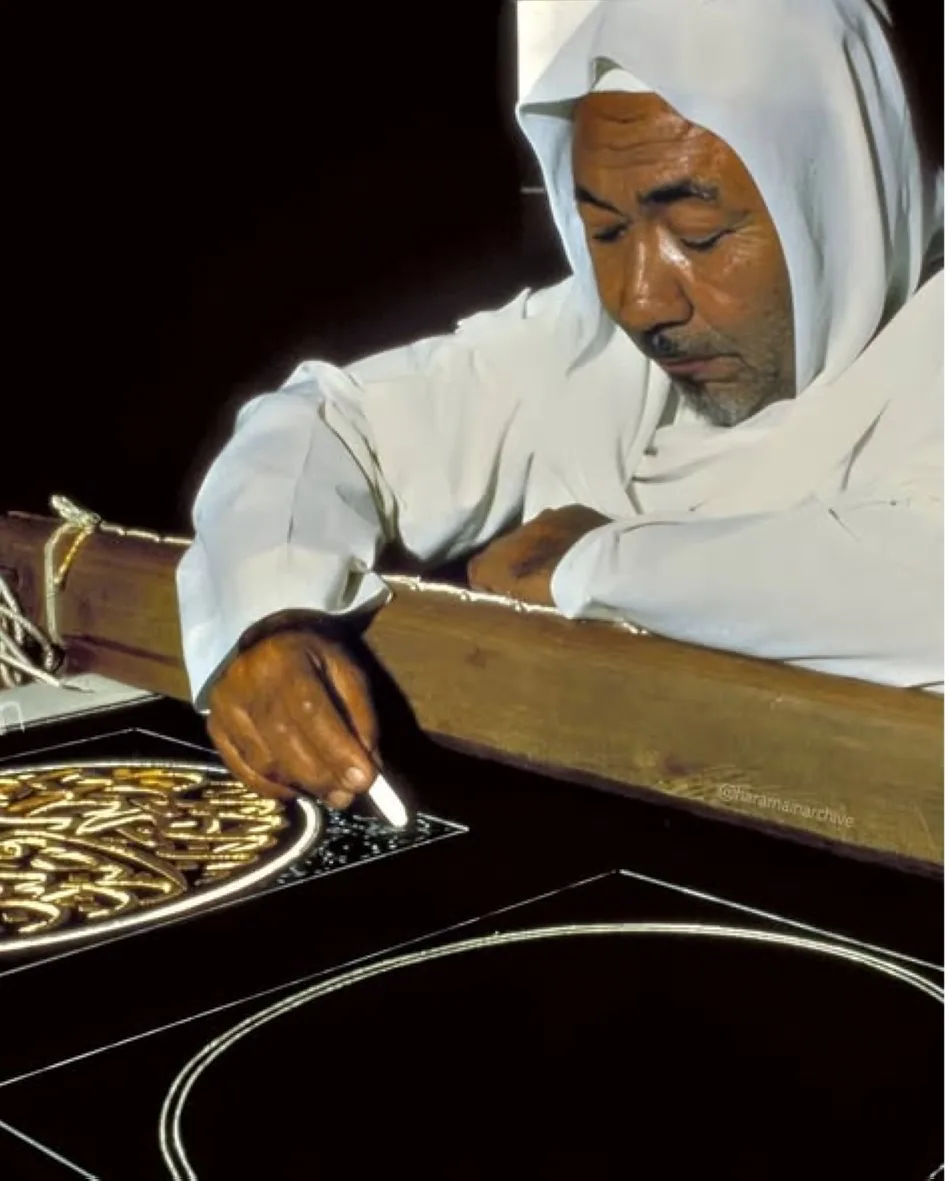
For 100 years, the sacred covering of the Kaaba has been created by the hands of masters whose names are inscribed in the history of Islam. The work of calligrapher Abdul Rahim Amin Bukhari has adorned the Kiswa for over fifty years.
Life in Service to Art and Faith
Abdul Rahim Amin Bukhari was born in Mecca in 1917 into a family that deeply respected Islamic artistic traditions. From a young age, he showed a natural talent for Arabic calligraphy, which became the foundation of his outstanding career. At the age of fifteen, Bukhari joined the Kiswa factory, founded by King Abdulaziz in 1927. Here, under the guidance of the best masters, he studied the delicate curves of classical scripts and the discipline of Islamic ornamentation. By the 1930s, he had become the chief technician and later the deputy director.
Contribution to the Adornment of Islamic Sanctuaries
For over thirty years, Bukhari dedicated himself to perfecting the Kiswa — the sacred covering of the Kaaba. His works included embroidered inscriptions on the fabric, the design and calligraphy of the Kaaba's door curtain, as well as the execution of decorations on the doors of the sanctuary. In 1944, by order of King Abdulaziz, he completed calligraphic works on the door of the Kaaba, which became a model of craftsmanship. Throughout his life, Bukhari participated in the creation of twenty-one Kiswa and oversaw the decoration of three doors of the sacred house. His name was inscribed in the golden threads of the Kiswa during the reign of King Faisal as recognition of his extraordinary contribution to Islamic art.
A Legacy Living in Every Stitch
When pilgrims perform the pilgrimage and see the majestic covering of the Kaaba, they connect with the legacy of the masters whose names are woven into its fabric. Bukhari's work is not just decoration, but a prayer in the form of calligraphy, captured in gold and silk. His works demonstrate how Islamic art serves a spiritual purpose, transforming sacred words into visual hymns. Until the end of his life in the late 1990s, he remained a revered figure in this rare and ancient craft, inspiring new generations of masters.
The Importance of Cultural Heritage for Pilgrims
Understanding the history and craftsmanship behind each element of the holy places deeply enriches the spiritual experience of pilgrimage. When believers learn about the lives of masters like Bukhari, they begin to see the Kiswa not just as fabric, but as a work of art created with love and faith. This knowledge transforms the pilgrimage into a more conscious journey, where every detail of architecture and decoration tells a story of centuries. Such a deep understanding of the cultural and spiritual significance of the sanctuaries helps pilgrims feel a connection with the millions of believers who have come here over the centuries.
Frequently Asked Questions
When was Bukhari's name inscribed in the Kiswa?
The name of the calligrapher was inscribed in the golden threads of the Kiswa during the reign of King Faisal, over fifty years ago, in recognition of his outstanding contribution to the decoration of the sacred covering of the Kaaba.
How many Kiswa did Bukhari create during his career?
In over thirty years of work, Abdul Rahim Amin Bukhari participated in the production of twenty-one Kiswa and oversaw the calligraphic decoration of three doors of the Kaaba, becoming a master of this rare and complex craft.
What education did Bukhari receive?
Bukhari began his training at the Kiswa factory at the age of fifteen, where he learned from the best masters of classical Arabic calligraphy and Islamic ornamentation, gradually rising to the position of chief technician and deputy director.