
Replacement of the Kaaba Kiswah: An Ancient Tradition of the Sacred Covering
🕋 THE REPLACEMENT OF THE KAABA KISWAH HAS BEGUN IN MECCA The annual ceremony of replacing the kiswah — the black silk covering of the Kaaba — has started at the Sacred Mosque in Mecca. 🗣 You can watch the live stream here: https://www.youtube.com/live/yYJjtr3fbZE?si=w6VDvKcWO7IIMTcl First, the new kiswah, made in the King Abdulaziz Complex for the production of the Kaaba kiswah, is delivered, after which specialists begin to remove the old covering. The kiswah is made from natural black silk and decorated with verses from the Holy Quran, embroidered with gold and silver threads. Its production takes months of artisans' work, hundreds of kilograms of silk and precious materials. The replacement of the kiswah is traditionally carried out at the beginning of the new year according to the Hijri and is one of the most significant events associated with the Kaaba. 🌴 @Sau
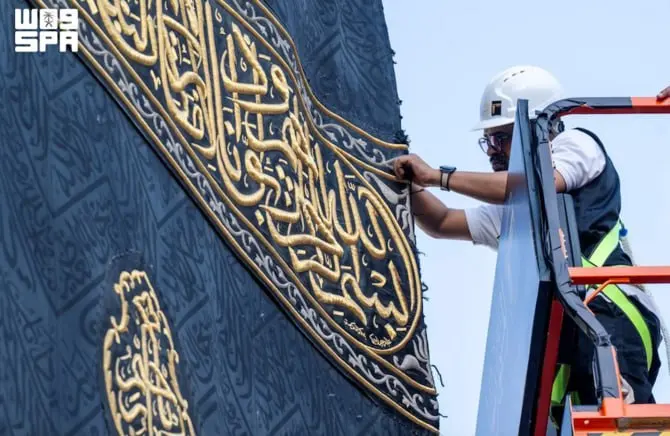
The annual ceremony of replacing the kiswah — the black silk covering of the Kaaba, adorned with verses from the Quran in gold and silver threads — has begun at the Sacred Mosque in Mecca.
What is the Kiswah and Its Spiritual Significance
The kiswah is a black silk covering that drapes the Kaaba, the central sanctuary of Islam. It is not just a piece of fabric, but a symbol of reverence and awe before the House of God. For centuries, the kiswah has served as a visual expression of the unity of Muslims from around the world who pilgrimage to this sacred place. Every fiber of this covering carries spiritual meaning and historical continuity of Islamic traditions.
The Process of Making the Kiswah
Creating a new kiswah is a labor-intensive process that takes several months. The covering is made in a special Complex named after King Abdulaziz, where artisans work with the finest quality natural black silk. Hundreds of kilograms of precious materials are used for decoration — sacred verses from the Quran are hand-embroidered with gold and silver threads. Every detail is executed with the utmost care, as this covering will be visible to millions of pilgrims.
The Annual Tradition of Replacement
The ceremony of replacing the kiswah takes place annually at the beginning of the new year in the Islamic calendar — according to the Hijri. This is one of the most significant rituals associated with the Kaaba. Specialists carefully remove the old covering and install the new one, while preserving the previous kiswah, which is later cut into pieces and distributed as a relic among the faithful and important institutions. This tradition dates back to pre-Islamic times and has continued for over fourteen centuries.
Significance for Pilgrims
For millions of Muslims performing Hajj or Umrah, the sight of the fresh kiswah on the Kaaba is a powerful spiritual moment. The new covering symbolizes the renewal of faith and spiritual rebirth. Pilgrims come from all corners of the earth, and contemplating the Kaaba in its grandeur and beauty leaves an indelible impression on the hearts of the faithful. It is a unity in reverence that brings together people of different cultures and languages in a common faith.
Frequently Asked Questions
How often is the Kiswah of the Kaaba changed?
The kiswah is changed once a year at the beginning of the Islamic year according to the Hijri. This ancient tradition has been observed for over fourteen hundred years and is considered one of the most important rituals in Islam.
What materials is the Kiswah made from?
The kiswah is made from the finest quality natural black silk. It is adorned with sacred verses from the Quran, embroidered with gold and silver threads, using hundreds of kilograms of precious materials.
What happens to the old Kiswah after it is replaced?
The old covering of the Kaaba is cut into pieces and distributed as a relic among the faithful, Islamic institutions, and museums. Each piece is considered a sacred relic, carrying spiritual significance for Muslims.